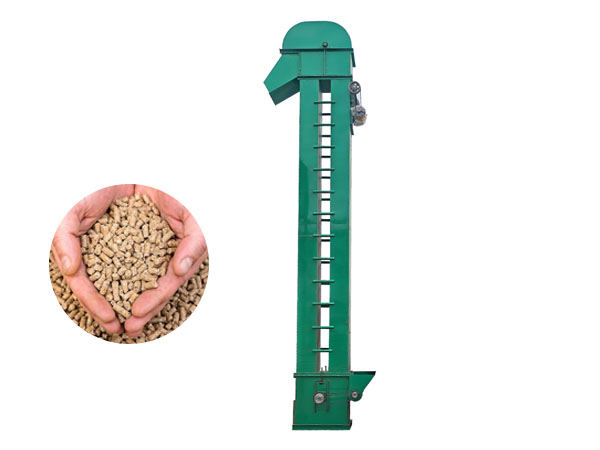
Bucket Elevator for Feed Pellets
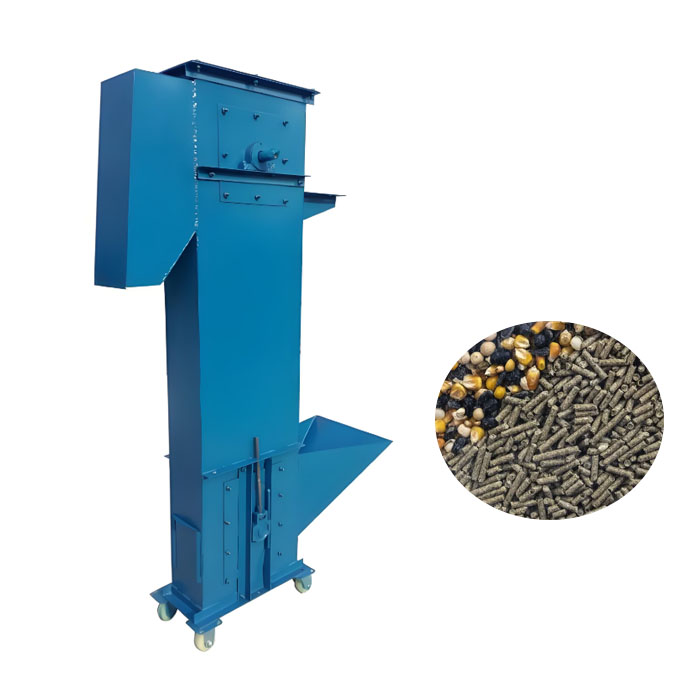
Designed for vertical conveying of animal feed pellets, it features low breakage rate, fully enclosed dust prevention, and stable operation, and is widely used in automated production lines for poultry feed, aquatic feed, ruminant feed, and pet food.
Conveying capacity: 5-200 T/H
Lifting height: 3-60 m
Conveying speed: 0.8-2.5 m/s
Hopper material: Carbon steel, stainless steel, food-grade plastic
Conveying method: Belt conveyor, chain conveyor
Applicable particle size: 2-12 mm
Motor power: 1.5-55 kW
What is a Bucket Elevator for Feed Pellets?
A Bucket Elevator for Feed Pellets is a vertical conveyor for animal feed pellets. It utilizes buckets evenly distributed along a conveyor belt or chain to continuously lift feed pellets from a low position to a designated height, then discharges them stably via centrifugal or gravity unloading. It can be integrated with pellet mills, coolers, vibrating screens, automatic packaging machines, and storage silos to form a complete automated production line. Depending on different production needs, the lifting height can reach 3-40 meters, and the conveying capacity can reach 5-200 tons/hour. It supports various configurations of buckets, including carbon steel, 304 stainless steel, and food-grade plastic, to meet the requirements of different feed production processes.
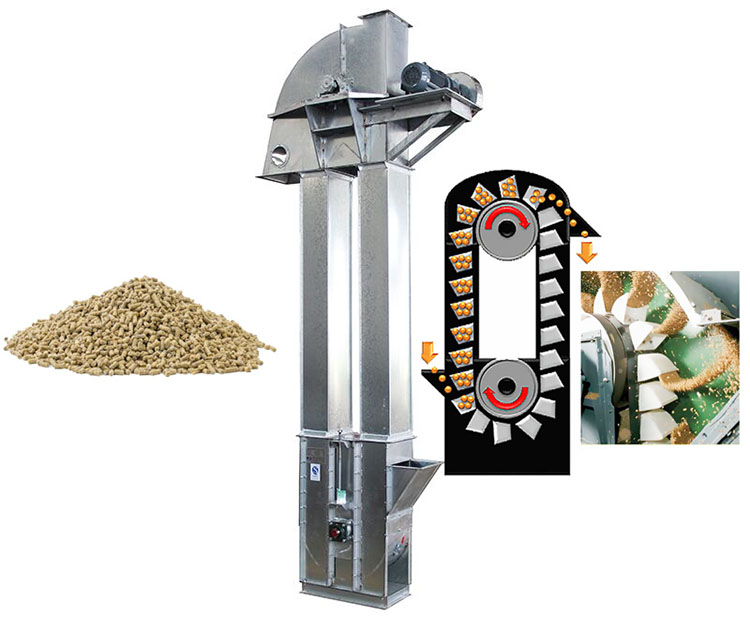
Feed pellets have a diameter of 2-12mm, are relatively small, easily broken, generate dust, and have good flowability. Using ordinary belt conveyors for high-height conveying not only requires a large floor space but also easily leads to pellet breakage and a decline in product quality. The Bucket Elevator for Feed Pellets uses a low-speed lifting, uniform loading, and fully enclosed conveying method, which greatly reduces pellet breakage and dust pollution, ensures feed pellet integrity, and improves conveying efficiency.
Why Choose a Bucket Elevator for Feed Pellets Production Lines?
In feed processing plants, continuous and stable feed pellet conveying is crucial for ensuring production efficiency. Bucket Elevator for Feed Pellets, with their vertical conveying, small footprint, and stable operation, have become the most common lifting equipment in feed pellet production lines. Compared to manual handling or inclined conveyors, they enable automatic continuous feeding, significantly reducing labor costs and increasing the automation level of the entire production line.
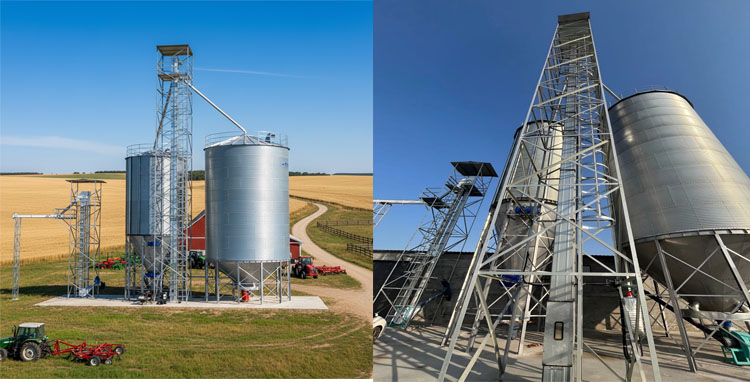
Because feed pellets retain a certain degree of brittleness after pelleting, ordinary high-speed conveying equipment can easily cause secondary breakage, affecting product appearance and yield. However, Bucket Elevator for Feed Pellets employ low-speed operation and a rationally designed bucket structure, minimizing impact on the material during lifting and effectively reducing pellet breakage rates. Simultaneously, the fully enclosed casing reduces dust leakage, improving the production workshop environment and meeting the environmental and hygiene requirements of modern feed mills. Furthermore, the equipment is easy to maintain, has low energy consumption, a long service life, and can operate stably continuously for 24 hours, making it an indispensable conveying device for large-scale feed production lines.
How does the Bucket Elevator for Feed Pellets work?
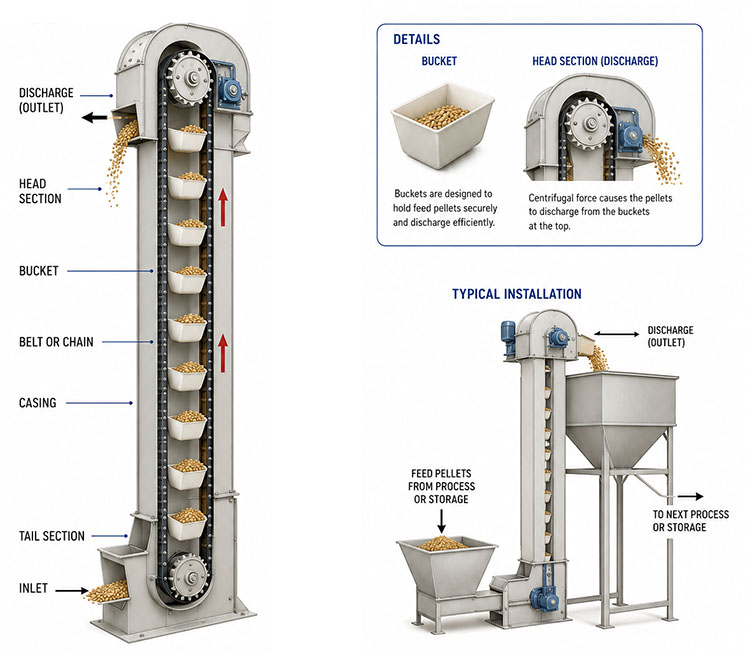
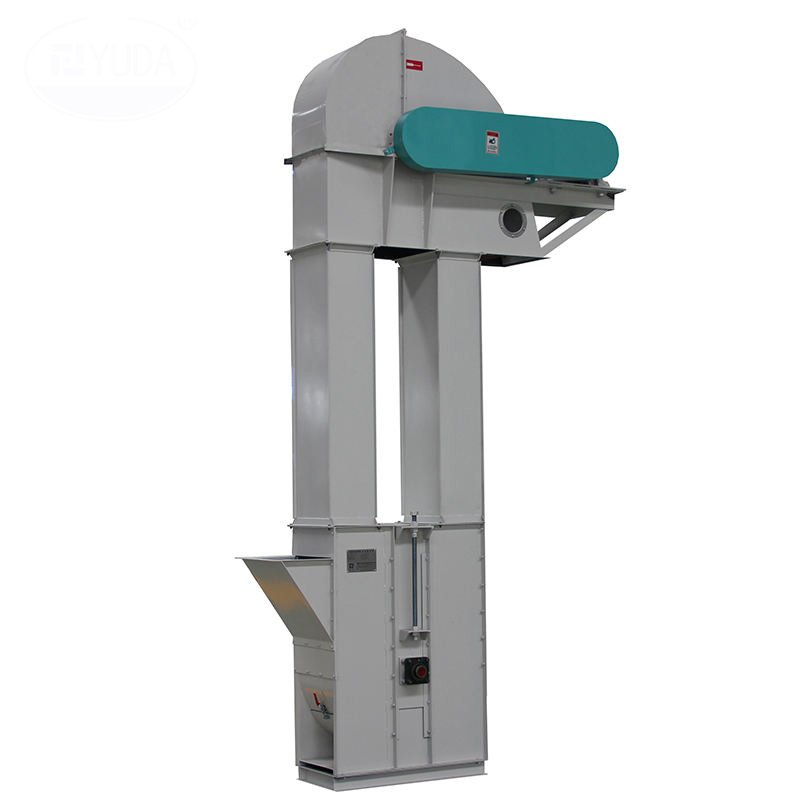
The Bucket Elevator for Feed Pellets mainly consists of a drive unit, a head unit, a conveyor belt (or chain), hoppers, a casing, a tensioning device, and a base. After the machine starts, the drive motor drives the conveyor belt or chain in a cyclical manner via a reducer. The hoppers mounted on the conveyor belt continuously scoop feed pellets from the bottom inlet and lift them vertically to the top. When the hoppers reach the head unit, under the action of centrifugal force and gravity, the pellets automatically enter the outlet and are conveyed to the next process, such as a cooler, screening machine, buffer silo, or automatic packaging machine. The empty hoppers then return to the bottom for continued refilling, achieving continuous, efficient, and stable material lifting. The entire conveying process uses a fully enclosed design, which not only reduces dust pollution but also effectively prevents external impurities from entering.
What feed pellets are suitable for the Bucket Elevator for Feed Pellets?
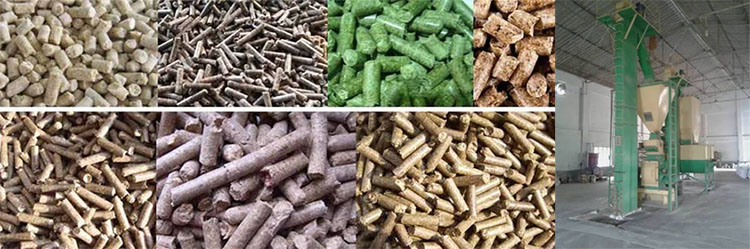
The Bucket Elevator for Feed Pellets can be used for most granular, blocky, and some powdery feed materials, and is particularly suitable for conveying products with high pellet integrity requirements. Common types include chicken feed pellets, duck feed pellets, pig feed pellets, cattle and sheep ruminant feed pellets, fish feed pellets, shrimp and crab aquatic feed pellets, and pet food pellets. Depending on the characteristics of different materials, different hopper specifications and conveying speeds can be selected based on pellet size, moisture content, bulk density, and conveying height. For example, for fragile pellets, a low-speed, deep hopper structure can be used; for high-volume production lines, a wide hopper and high-speed conveying design can be adopted, thus balancing conveying efficiency and pellet integrity.
What types of Bucket Elevators for Feed Pellets are available?
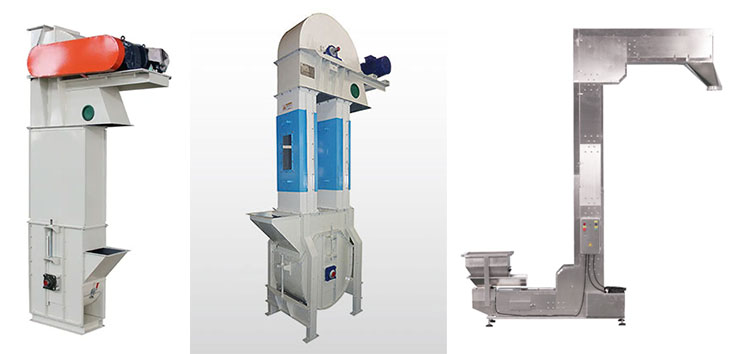
To meet the conveying needs of different feed mills, Bucket Elevators for Feed Pellets are generally classified into three types: belt-driven, chain-driven, and Z-type. Belt-driven Bucket Elevators for Feed Pellets are suitable for conveying ordinary feed pellets, grains, and light bulk materials. They feature stable operation, low noise, low energy consumption, and convenient maintenance, making them the most widely used type in the feed industry. Chain-driven Bucket Elevators for Feed Pellets are suitable for conditions requiring large lifting capacity, high lifting height, or high material temperature. They offer advantages such as strong load-bearing capacity, good wear resistance, and long service life. Z-type Bucket Elevators for Feed Pellets are mainly used in packaging production lines. Through a combination of horizontal + vertical + horizontal conveying, they can directly convey feed pellets to automatic packaging machines, combination scales, and other equipment, achieving breakage-free feeding.
Bucket Elevator for Feed Pellets Parameters
|
Model |
Bucket width (mm) |
Conveying capacity (m³/h) |
Maximum lifting height (m) |
Power range (kW) |
Remark |
|
TDTG25/13 |
250 |
15-25 |
30 |
2.2-7.5 |
Suitable for small-capacity feed production lines |
|
TDTG36/18 |
360 |
35-55 |
40 |
5.5-15 |
Most popular among medium-sized feed mills |
|
TDTG48/23 |
480 |
65-90 |
45 |
7.5-22 |
Suitable for large livestock and poultry feed lines |
|
TDTG60/28 |
600 |
100-150 |
50 |
11-30 |
High-capacity aquatic extrusion feed line |
Applications of Bucket Elevators for Feed Pellets in the Feed Industry
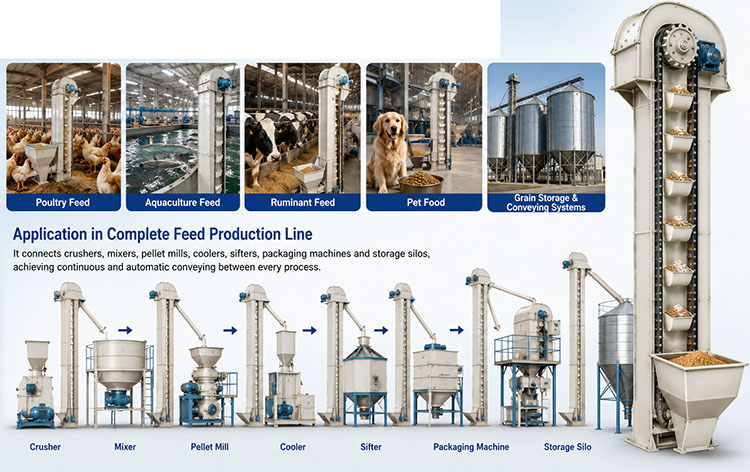
Bucket elevators for feed pellets are widely used in various animal feed processing lines, including poultry feed production, aquatic feed manufacturing, ruminant feed processing, pet food processing, and grain storage and conveying systems. In a complete feed production process, the equipment can connect to grinders, mixers, pellet mills, coolers, screening machines, packaging machines, and storage silos, achieving continuous and automated conveying between each process.
How to Choose the Right Bucket Elevator for Feed Pellets?
When selecting a bucket elevator for feed pellets, the conveying capacity, lifting height, material characteristics, and on-site installation space should be comprehensively considered. For production lines with large conveying capacities, wide hoppers and high-speed conveying configurations should be prioritized; for fragile particles, low-speed lifting and deep bucket designs are recommended to reduce particle collision and breakage. If the conveying environment is corrosive or has high food hygiene requirements, 304 or 316 stainless steel materials can be selected; for large feed mills or high-lift conditions, chain-type bucket elevators are recommended to improve load-bearing capacity and service life. In addition, overall planning should be carried out based on the interface size of subsequent equipment, automation control methods, and future expansion needs to ensure that the equipment can be seamlessly connected with the entire production line and improve system operating efficiency.
Bucket Elevator for Feed Pellets Customer Case
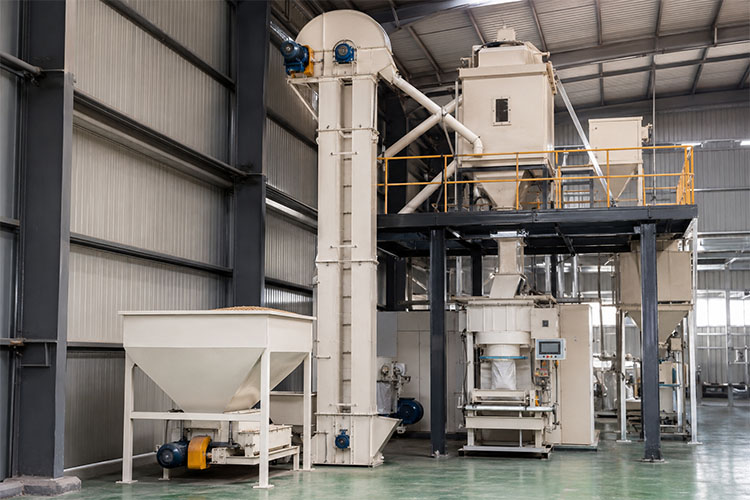
A large poultry feed producer in Indonesia selected the TD400 Bucket Elevator for Feed Pellets for its newly built 20-ton/hour feed pellet production line to improve automation. The equipment conveys chicken feed pellets with a diameter of 4-8mm, lifting them to a height of 18 meters. It features a food-grade plastic hopper and a carbon steel powder-coated casing, coupled with a 5.5kW geared motor, enabling 24-hour continuous operation. After the equipment was put into use, the pellet breakage rate was controlled below 0.3%, production efficiency increased by approximately 35%, workshop dust was significantly reduced, and it was successfully integrated with pellet mills, counter-current coolers, vibrating screens, and automatic packaging machines to form a fully automated production line, helping the customer reduce labor costs and improve product quality and market competitiveness.
Bucket Elevator for Feed Pellets FAQ
Q: How to ensure that the pellets do not break during the conveying process?
A: Gravity discharge is used, with a chain speed of only 1.2-1.6 m/s, eliminating high-speed impact during discharge. Combined with a deep hopper and guide plates, the pellets are discharged via a "slip-off" method, resulting in a measured breakage rate increase generally below 0.5%.
Q: How to clean when changing formulas to avoid cross-contamination?
A: The base has a quick-opening cleaning door, and the self-cleaning structure minimizes material accumulation at the bottom. Compressed air or a water gun can be used for cleaning. Some models also offer an optional tail hinged tipping mechanism for more thorough cleaning.
Q: Can it convey feed containing moisture or oil?
A: Yes. The addition of an anti-stick liner (UHMWPE/polyurethane) inside the hopper effectively prevents clogging and avoids iron contamination, making it ideal for high-moisture or high-oil pellets.
Why choose our Bucket Elevator for Feed Pellets?
As a professional manufacturer of Bucket Elevators for Feed Pellets, DaHan Machinery can provide customized solutions based on customer material characteristics, production capacity, and installation environment. The equipment is constructed from high-quality steel, with key components precision-machined, ensuring stable operation, convenient maintenance, and a long service life. It supports carbon steel, stainless steel, and food-grade configurations, and offers CE certification and export packaging services. Comprehensive technical support, installation guidance, and after-sales service are also provided. Whether it's a single unit or an entire feed production line, we can provide customers with efficient and reliable vertical conveying solutions, helping enterprises improve production efficiency and achieve intelligent and automated production.
Products
Hot Modules
locations


headquarters
Address:China,Yanjin county forest park gate to the west 1000 meters north road.