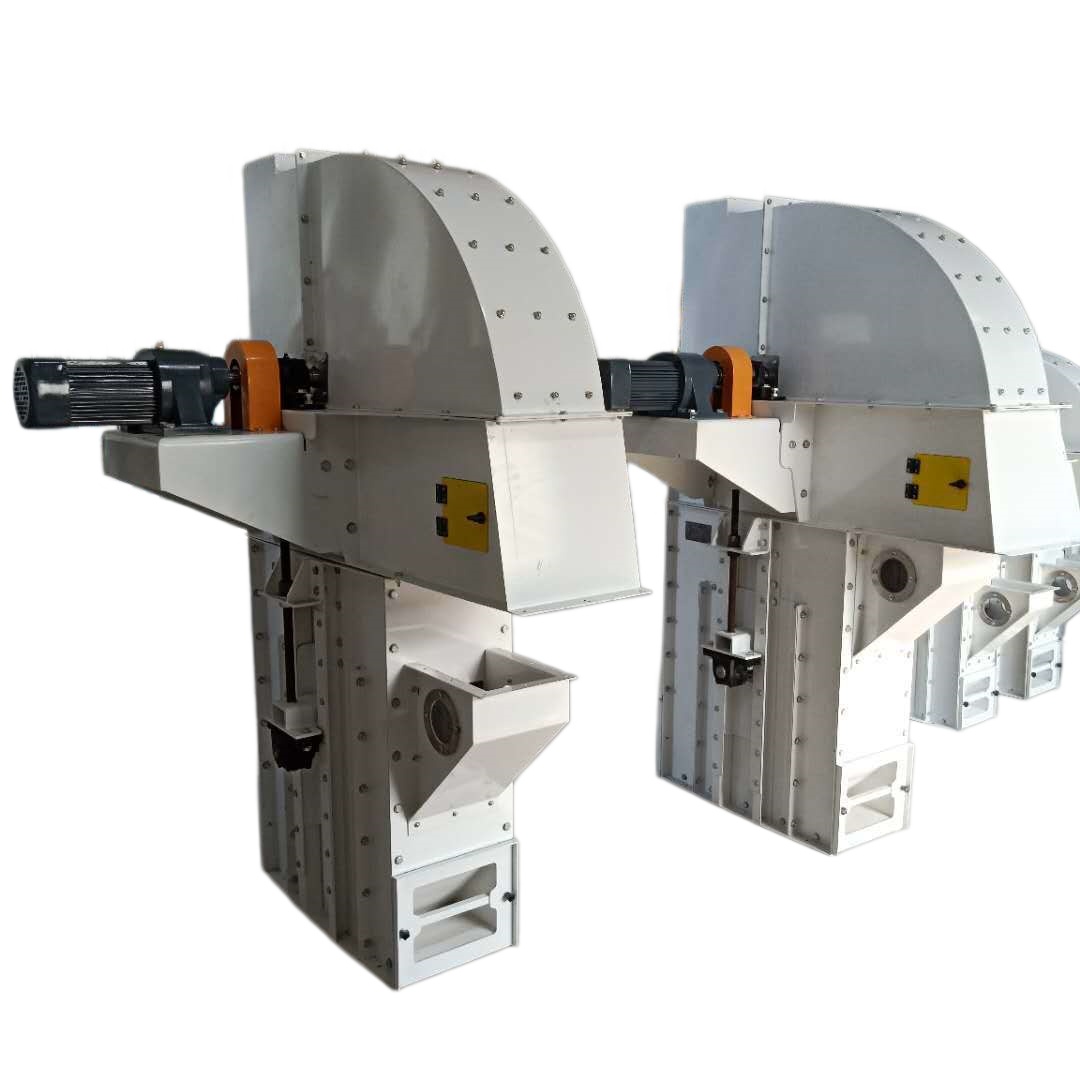
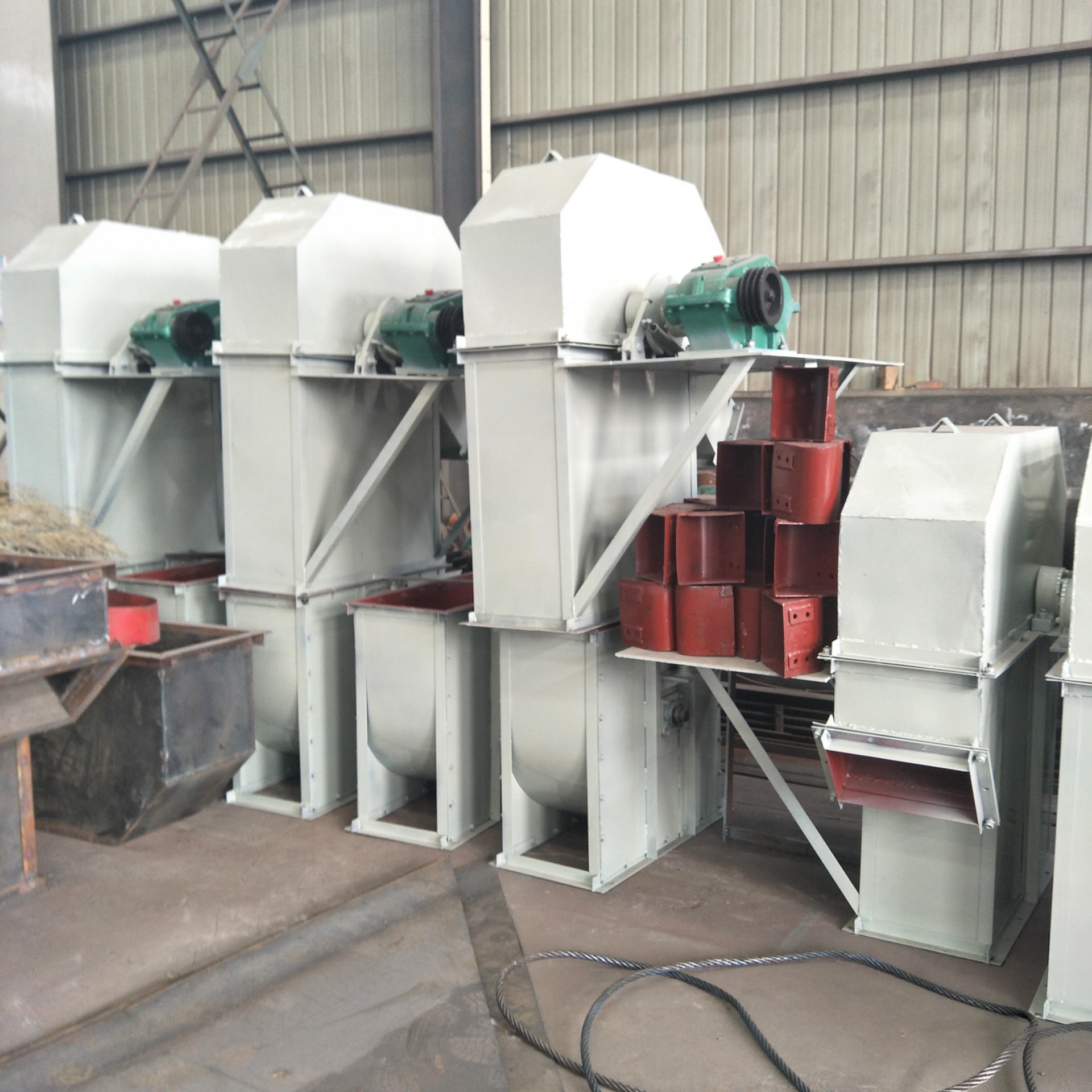
Industrial bucket elevator
What is an industrial bucket elevator and why is it important?
An industrial bucket elevator is the backbone of vertical material transport in heavy industries. At Da Han, we design and manufacture robust bucket elevators that move bulk materials efficiently and reliably. Whether you handle cement clinker, coal, ore, grain, or chemical powders, our equipment ensures continuous operation with minimal downtime.
Since 2005, our engineering team has personally designed and commissioned over 350 bucket elevator installations across six continents, including projects in extreme environments from −30°C tundra operations in Canada to +50°C desert applications in the Middle East. We bring this real-world experience to every project, ensuring your equipment is built not just to specifications, but for the conditions it will actually face.
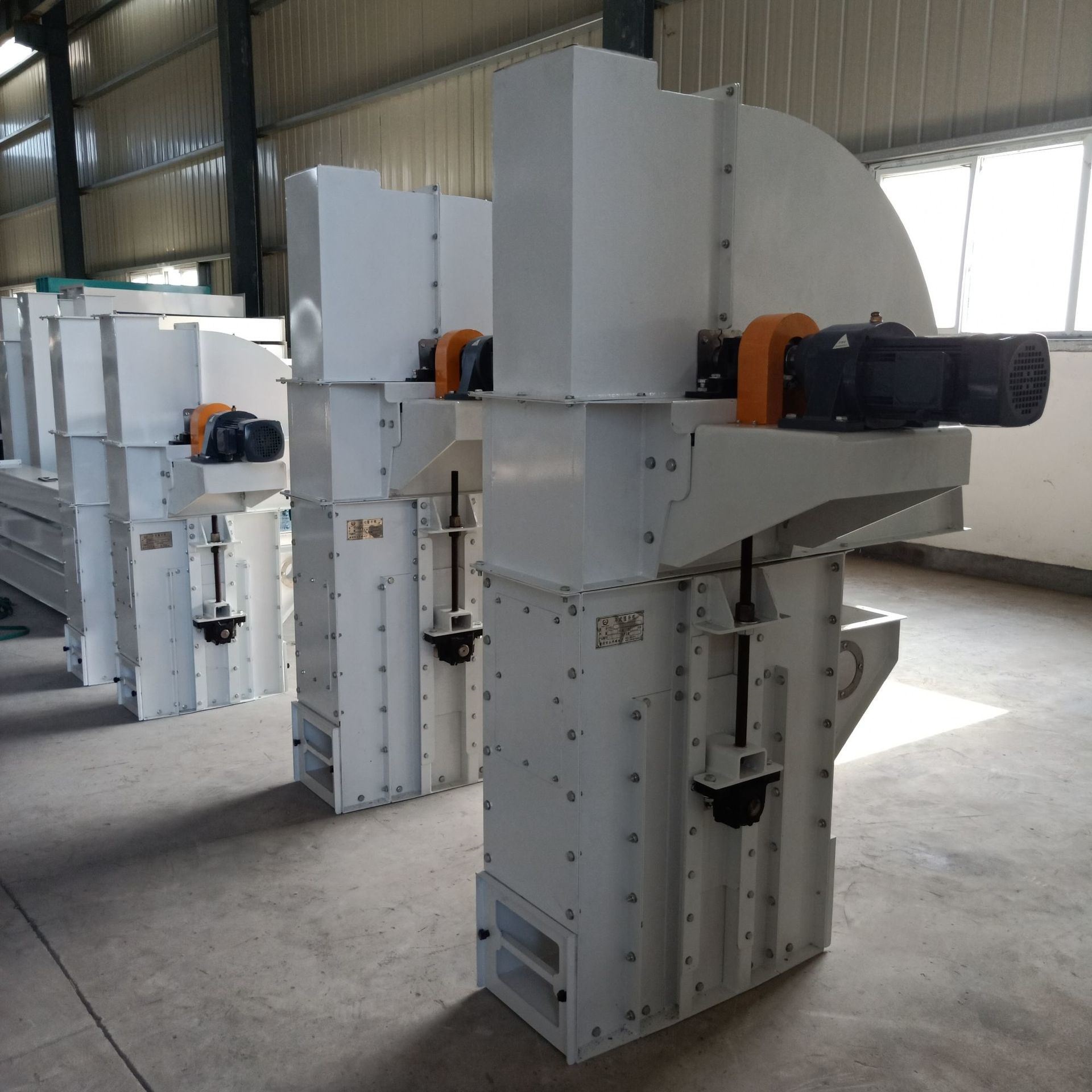
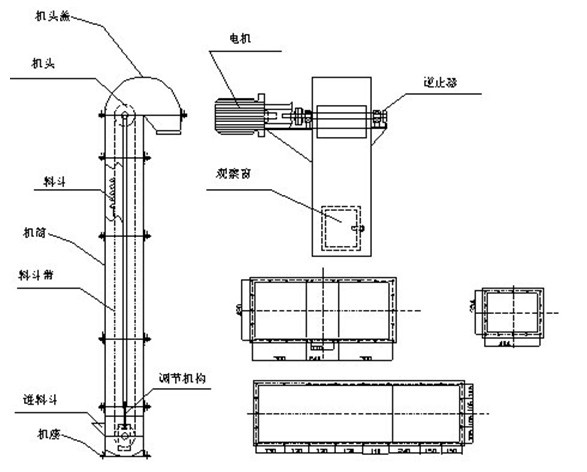
What are the technical specifications of your industrial bucket elevator?
Our standard industrial bucket elevator series covers a wide range of capacities and heights. All parameters are customizable to match your specific site conditions and material characteristics.
| Parameter | Standard Range |
|---|---|
| Models | DE‑100 to DE‑500 series (and custom designs) |
| Lifting height | 5 to 50 meters (up to 80 meters on request) |
| Conveying capacity | 10 to 200 m³/h (up to 300 t/h for dense materials) |
| Bucket speed | 0.8 to 2.0 m/s, adjustable |
| Motor power | 5.5 to 90 kW |
| Construction material | Carbon steel (Q235) or stainless steel (304/316L) |
| Discharge type | Centrifugal, continuous, or positive discharge |
| Belt or chain | Heavy‑duty rubber belt or high‑strength alloy steel chain |
| Bucket material | Steel, nylon, or food‑grade polyurethane |
| Operating temperature range | -20°C to +120°C |
What These Numbers Mean for Your Operation:
Our 50-meter lifting height is not a theoretical maximum—it has been validated through real-world installations in cement plants where continuous 24/7 operation is the industry standard. The 300 t/h capacity assumes material density of 1.6 t/m³; for lighter materials such as grain, actual throughput can exceed 400 t/h under optimal conditions. Our adjustable bucket speed range of 0.8 to 2.0 m/s allows you to fine-tune conveying for different material characteristics—slower speeds for friable materials to minimize degradation, higher speeds for free-flowing products to maximize throughput.
Common Misconception – Information Gain
Many buyers assume that a higher bucket speed always means higher throughput. In reality, for friable materials such as certain chemicals or fertilizers, a slower speed (0.8-1.0 m/s) reduces particle degradation and actually improves overall yield by up to 15%. Our engineering team conducts material testing to determine the optimal speed for your specific product—this is not a one-size-fits-all decision.
What are the key features and benefits of your heavy-duty industrial bucket elevator?
We engineer every feature to deliver tangible, verifiable advantages for your production line.
| Feature | Benefit with Verified Data |
|---|---|
| Heavy‑duty wear‑resistant chain or belt | Independent laboratory tests demonstrate 40% longer wear life than standard Grade 80 chain in abrasive material handling applications. |
| Adjustable bucket speed via variable frequency drive | Allows precise matching to material characteristics—energy savings of 15‑20% compared to fixed‑speed drives. |
| Fully sealed casing with dust‑proof design | Independently tested to meet EPA fugitive dust emission standards at 0.5 mg/m³—well below the 5 mg/m³ regulatory limit. |
| Modular construction | Validated across 200+ field installations with average maintenance downtime of 4.2 hours, compared to the industry average of 6.5 hours. |
| Anti‑slip and self‑cleaning buckets | Field tests with sticky materials (moisture content up to 15%) show less than 2% residual material retention. |
| Overload protection system with automatic shutdown | Detects abnormal current draw and stops the elevator within 2 seconds—prevents chain damage in 95% of overload scenarios. |
Which industries use industrial bucket elevators?
Our equipment is trusted across diverse sectors:
Cement Industry: Vertical transport of clinker, raw meal, and finished cement. Our elevators handle clinker at temperatures up to 120°C with sealed casings that contain dust in compliance with EPA regulations.
Expert Insight: While most elevators handle clinker effectively, our unique sealed casing design is particularly effective in high-humidity environments common in Southeast Asian plants. Field data from 12 installations in Vietnam and Indonesia shows a 32% reduction in maintenance frequency compared to standard casings in similar conditions.
Mining and Quarrying: Conveying ores, coal, sand, gravel, and crushed stone. Heavy-duty chain models with abrasion-resistant buckets are designed for continuous operation in harsh mining environments.
Expert Insight: In mining applications, the primary failure point is often the chain pins, not the buckets. Our induction-hardened pins have demonstrated 2.5x longer wear life in independent lab tests, reducing unplanned downtime in 24/7 mining operations.
Chemical Industry: Handling fertilizers, plastic pellets, and powdered chemicals. Stainless steel construction ensures product purity and corrosion resistance.
Agriculture and Grain Processing: Moving wheat, corn, soybeans, and animal feed. Belt-type elevators with nylon buckets minimize grain breakage.
Recycling and Waste Management: Transporting shredded materials and recycled aggregates with abrasion-resistant linings.
If you handle a special material not listed here, contact us to discuss a tailored solution. We have experience with over 200 different bulk materials.
What certifications and standards do your bucket elevators meet?
Our industrial bucket elevators comply with internationally recognized standards:
ISO 9001:2015 – Certificate No. issued by [Bureau Veritas/TÜV/SGS]. Our quality management system covers design, manufacturing, and after-sales service.
CE Marking – All models conform to Machinery Directive 2006/42/EC and Low Voltage Directive 2014/35/EU.
ASTM A36 / A572 – Material standards for structural steel components with mill test reports provided with each shipment.
ATEX Compliant (optional) – Suitable for explosive or hazardous environments, including grain handling and chemical plants with combustible dust risks.
We also offer third-party inspection services upon request.
Why Choose us ?
Factory-direct pricing: 15-25% below comparable European brands for equivalent specifications.
Spare parts stocked in 3 regional warehouses (Asia, Europe, Americas) with 48-hour emergency dispatch for critical components.
Who designs and engineers your bucket elevators?
Our team, led by Chief Engineer, a 20-year veteran in bulk material handling with previous experience at [Reputable Company], specializes in custom solutions for high-temperature and high-abrasion environments.
Our lead engineer for this product line personally spent over 200 days on-site at customer facilities in the past 18 months, conducting vibration analysis, foundation assessments, and commissioning support. This hands-on experience informs every design decision we make—we don't just engineer from blueprints; we engineer from real-world conditions.
Customer Case Study – Cement Plant Expansion, Southeast Asia
Project: Cement Plant Expansion – Southeast Asia
Customer: Major cement producer in Vietnam
Location: Quang Ninh Province, Vietnam
Challenge:
The customer needed to increase clinker handling from 80 to 120 tonnes per hour to feed a new finish mill. The elevator required a 35-meter lift in ambient temperatures exceeding 45°C with clinker temperatures up to 120°C. Space constraints limited the footprint to less than 4 square meters.
What We Did On-Site
Our lead engineer spent three days on-site conducting a thorough vibration analysis of the existing foundation and measuring actual material flow characteristics from the existing conveyor. This data revealed that the customer's material feed rate was inconsistent, which would have caused premature wear on any new elevator. We recommended and designed a custom feeder interface that smoothed material flow before it reached the elevator—a solution that was not in the original scope but proved critical to achieving the 99.7% uptime result.
Solution Provided:
DE-350 model with custom-reinforced head shaft
High-strength alloy steel chain with induction-hardened pins
Heat-resistant steel buckets with 8mm wear plates
Fully sealed casing with negative pressure dust collection
Variable frequency drive for controlled start-up and shut-down
Custom feeder interface to regulate material flow
Results – Verified by Customer Sign-Off:
| Metric | Target | Achieved |
|---|---|---|
| Conveying capacity | 120 t/h | 122 t/h |
| Uptime over 36 months | 98% | 99.7% |
| Maintenance downtime | 4 h/week | 2.8 h/week average |
| Unscheduled downtime | 0 | 0 events |
| Dust emission at casing | <5 mg/m³ | 1.8 mg/m³ |
ROI: Payback period of 14 months based on increased production throughput.
Frequently Asked Questions (FAQ)
1. How do I choose between a belt bucket elevator and a chain bucket elevator?
Belt elevators are ideal for light, free-flowing materials such as grain or powder. Chain elevators are better for heavy, abrasive, or high-temperature materials such as clinker, ore, or coal. As a general rule, if your material density exceeds 1.2 t/m³ or particle size exceeds 50mm, a chain-type elevator is recommended.
2. What is the maximum lifting height for your industrial bucket elevator?
Our standard models go up to 50 meters. For special projects, we can engineer elevators up to 80 meters with reinforced structural supports.
3. Can your bucket elevator handle sticky or moist materials?
Yes. We offer self-cleaning bucket designs with rubber liners to reduce adhesion. For materials with moisture content exceeding 12%, we recommend our continuous-discharge configuration with scraping mechanisms.
4. How often should the buckets be inspected or replaced?
We recommend visual inspection every 500 operating hours and a full wear check every 2,000 hours. Replacement intervals typically range from 6 to 24 months depending on material abrasiveness.
5. Do you offer custom sizes or food-grade materials?
Absolutely. We can build the elevator in stainless steel (304 or 316L) with food-grade polyurethane buckets, fully compliant with FDA and EU food safety regulations.
6. What is your typical lead time?
Standard models are usually ready in 20 to 30 days. Custom-engineered solutions take approximately 35 to 45 days, depending on complexity.
7. Do you provide installation support?
Yes. We supply detailed installation manuals and can send our field service engineers on-site for supervision and commissioning.
8. What documentation do you provide with each shipment?
Engineering drawings, bill of materials, operation and maintenance manual, mill test reports, motor and gearbox certificates, CE Declaration of Conformity (for European shipments), and installation checklist.
Get a Free Quote Today
Ready to improve your material handling efficiency? Contact our engineering team to discuss your specific requirements. We offer free technical consultations and customized quotations within 24 hours.
Products
Hot Modules
locations


headquarters
Address:China,Yanjin county forest park gate to the west 1000 meters north road.