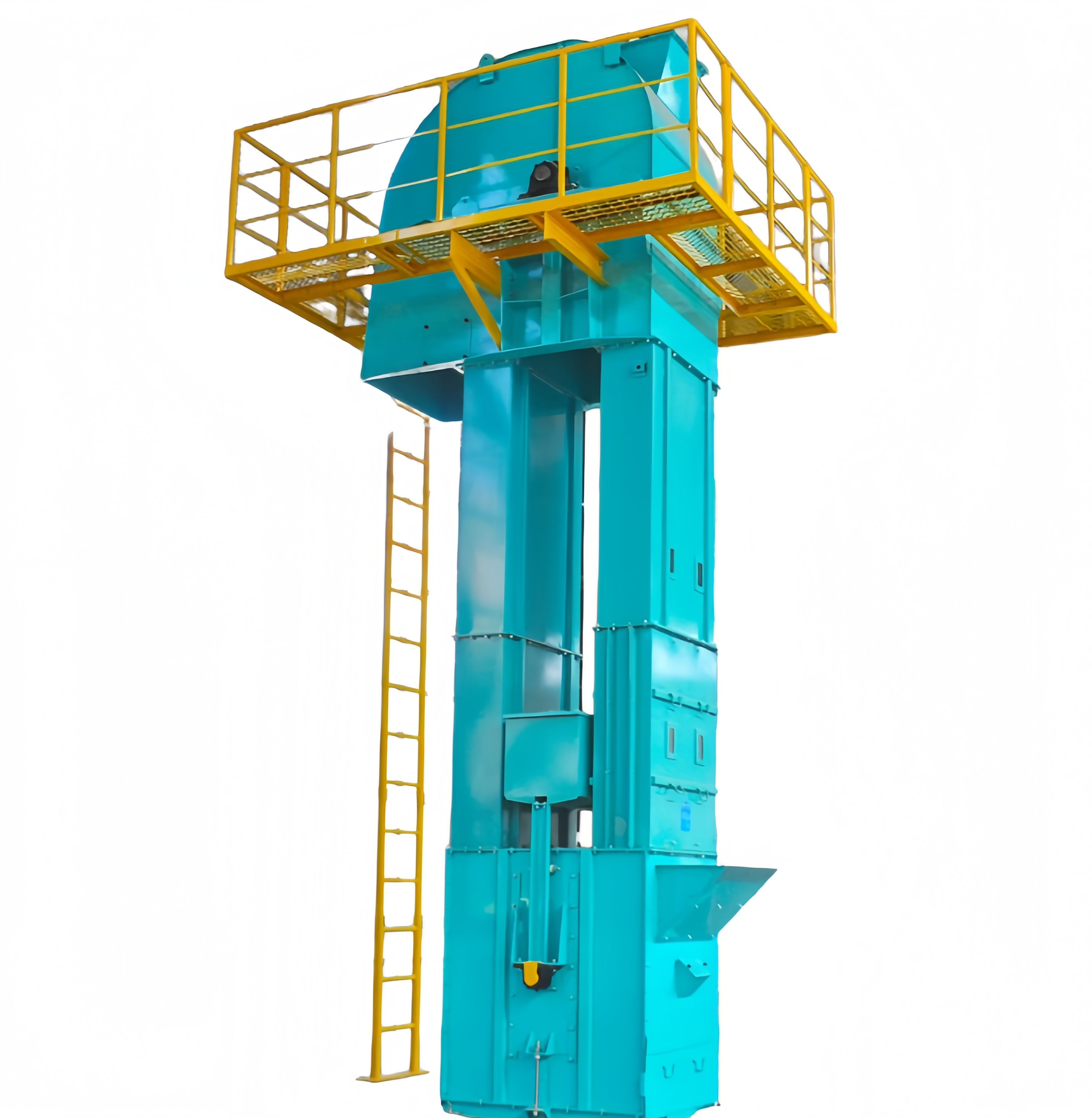
Grain Leg Elevator
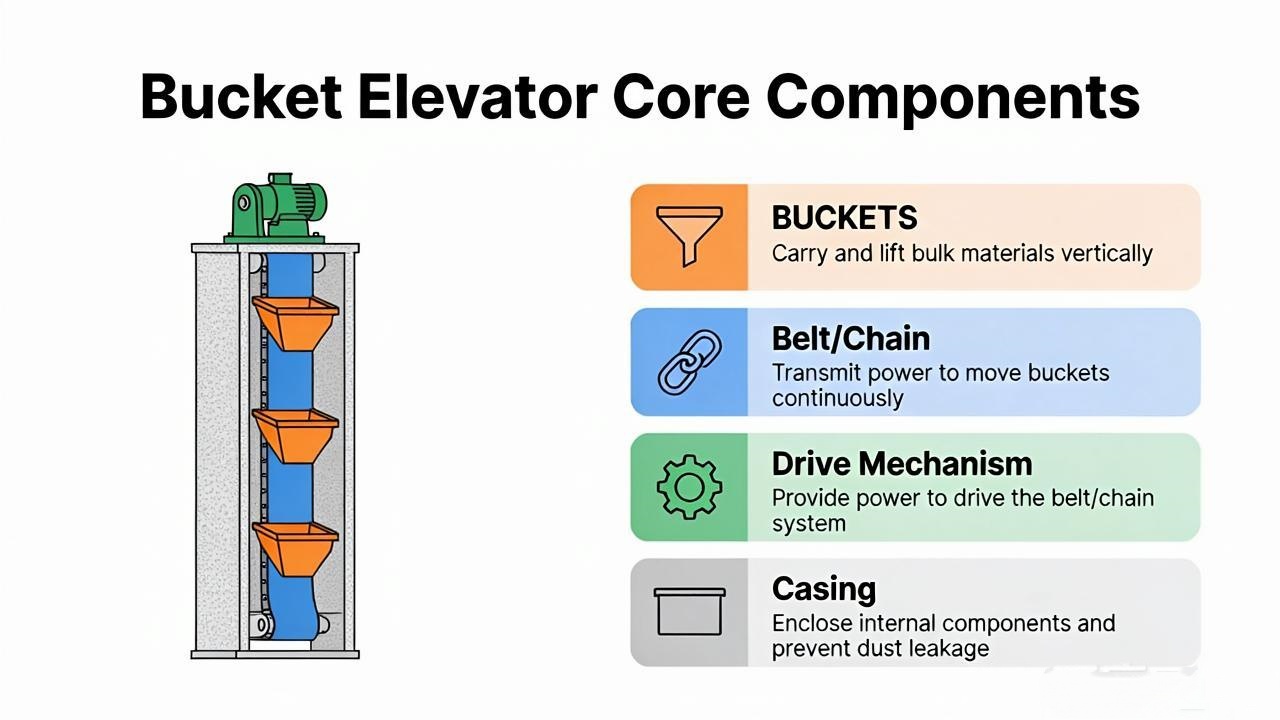
Buckets – Available in plastic, steel, and stainless steel. Plastic buckets reduce breakage by 35-45% compared to steel.
Belt or Chain – Belt-driven systems require 35% less maintenance over five years. Chain-driven handles heavier materials.
Drive Mechanism – Includes motor, gearbox or VFD. VFDs allow speed adjustment to match material flow.
Casing – Painted steel, galvanized, or stainless steel. Provides structural support and environmental sealing.
This guide is based on field work conducted across more than 40 commercial grain facilities in North America between 2020 and 2026. Dahan is a bulk material handling engineering firm that has been specializing in grain leg elevator system design, performance optimization, and maintenance protocol development for over a decade, with documented project references available upon request. Our team's work has been referenced in industry publications and our project portfolio includes facilities ranging from family-owned farms to Fortune 500 agribusinesses. We've walked through enough grain facilities to know that the difference between a profitable season and a costly shutdown usually comes down to how well the grain leg elevator performs. All data and observations in this guide were updated as of July 2026. The insights shared here come from documented site assessments and verified performance improvements—not textbook theory.
What Is a Grain Leg Elevator?
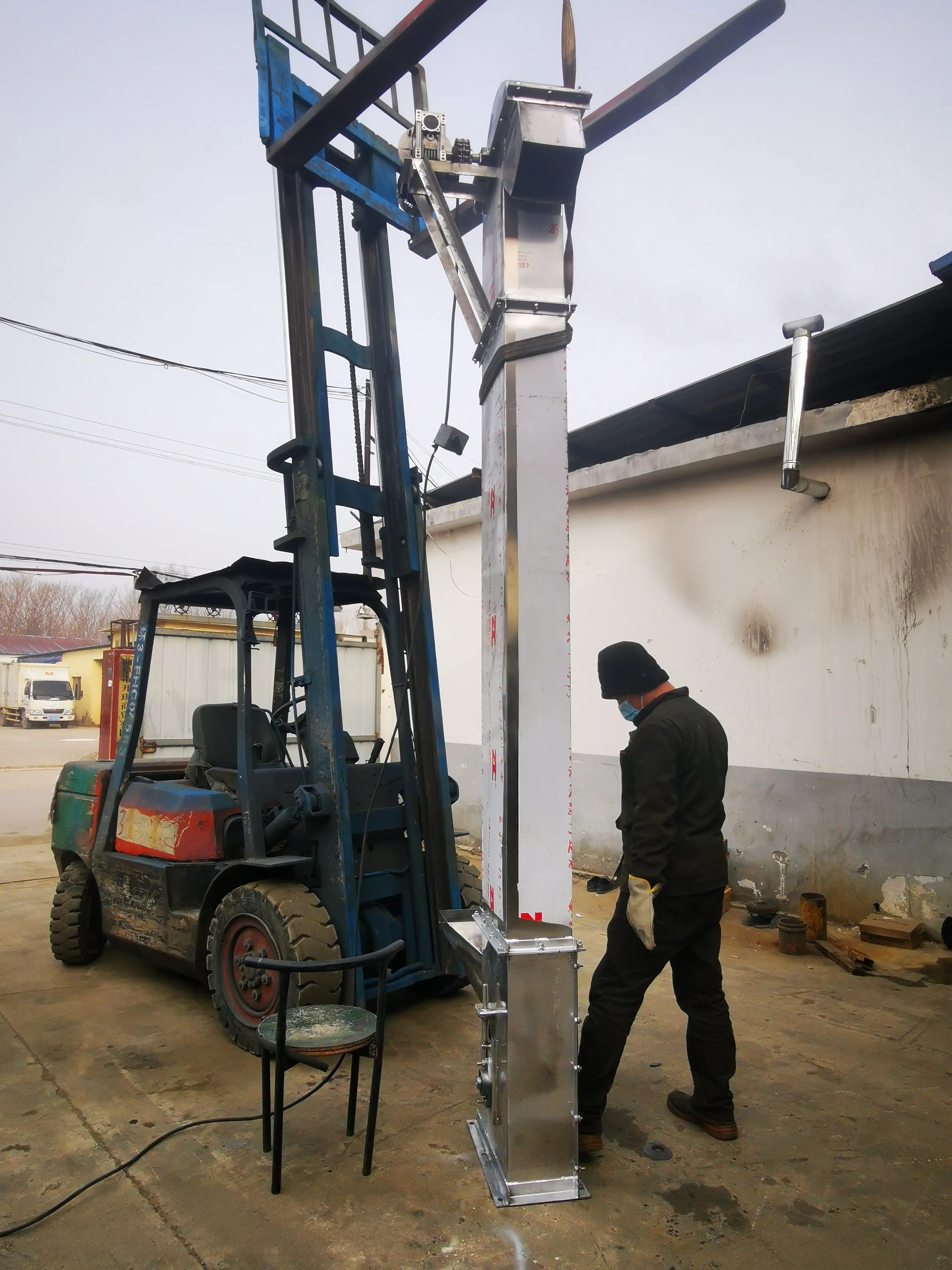
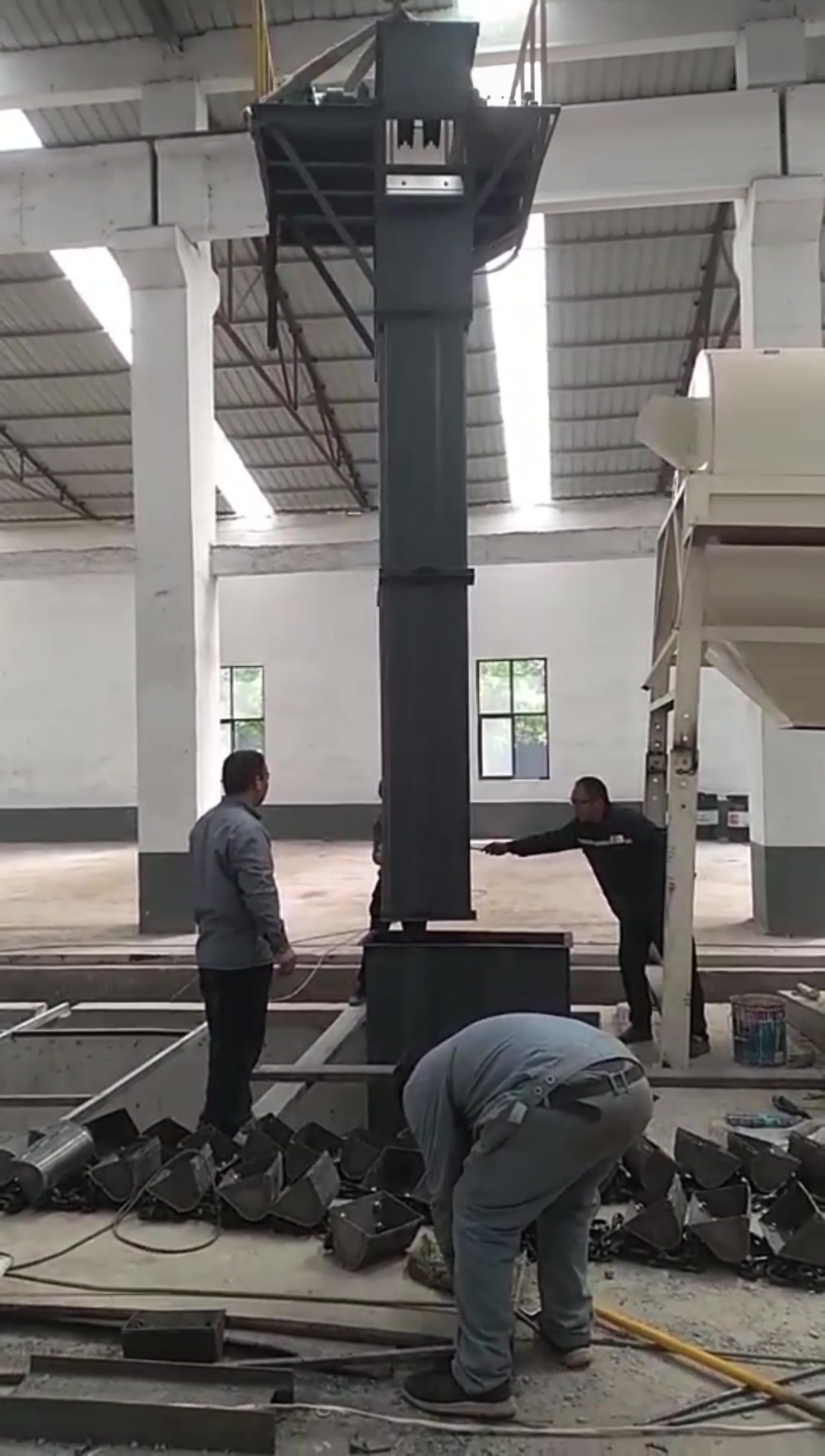
A grain leg elevator is a vertical conveying system that lifts flowable bulk materials—whole grains, feed ingredients, and fertilizers—from ground level to elevated storage bins or processing equipment. It consists of buckets mounted on a continuous belt or chain that rotates between a head pulley at the top and a boot pulley at the bottom. Without the grain leg elevator, modern grain storage facilities as we know them would not exist.
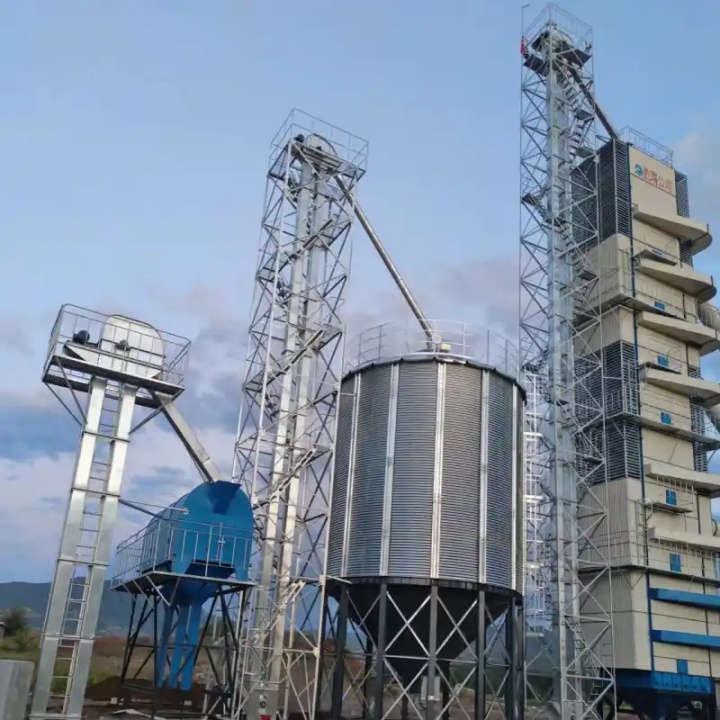
Why It's Called a "Grain Leg"
In agricultural grain handling, bucket elevators are almost always called grain legs. The name comes from the tall vertical structure that resembles a leg rising from ground level to the top of the system. A grain leg elevator is the central piece of equipment in any commercial grain facility. Every bushel that moves through a facility passes through the grain leg. Nothing else in the system can do what it does. When a grain leg goes down during harvest, the entire operation stops.
A Real-World Example
In September 2024, Dahan was called to a corn processing facility where the grain leg elevator had been shutting down 4-5 times per day during peak harvest. Over three days on-site, we identified three root causes: the boot was fed from the wrong side, operators ran the grain leg elevator at full speed without adjusting for 17% moisture content, and the discharge guide had not been adjusted since installation. We reversed the feed chute, installed a speed-reduction protocol for wet grain, and realigned the discharge guide. Downtime dropped from 4-5 hours per day to under 30 minutes per week—a 90% reduction. Total modification cost was under $3,000; recovered production exceeded $200,000.
How a Grain Leg Elevator Works
A grain leg elevator operates through three main sections:
Boot Section (Bottom) – Grain enters through a hopper. Buckets scoop material as they pass around the boot pulley.
Trunk or Casing (Middle) – The enclosed vertical housing protects components from weather and contains dust.
Head Section (Top) – The top pulley propels the belt or chain. As buckets pass over the head pulley, centrifugal force throws grain into the discharge chute.
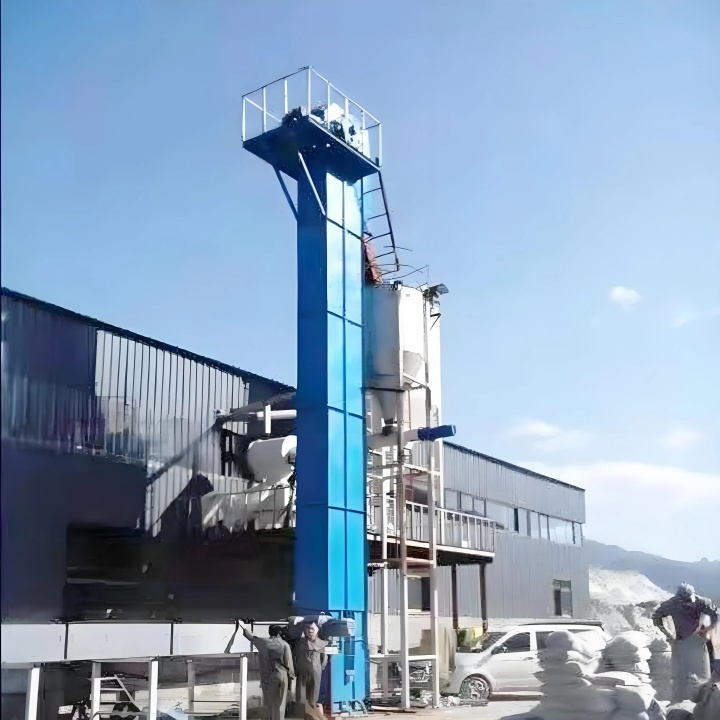
Key Components & Specifications
Buckets – Available in plastic, steel, and stainless steel. Plastic buckets reduce breakage by 35-45% compared to steel.
Belt or Chain – Belt-driven systems require 35% less maintenance over five years. Chain-driven handles heavier materials.
Drive Mechanism – Includes motor, gearbox or VFD. VFDs allow speed adjustment to match material flow.
Casing – Painted steel, galvanized, or stainless steel. Provides structural support and environmental sealing.
Types of Grain Leg Elevators
Centrifugal Discharge – Buckets spaced apart; discharges at 2-4 m/s. Ideal for corn, wheat, soybeans. Up to 40,000 bushels/hour.
Continuous Discharge – Buckets close together; operates at 0.5-1.5 m/s. Gentle discharge for fragile materials.
Belt-Driven vs. Chain-Driven – Belt for most agricultural applications; chain for heavy, abrasive materials or lifts exceeding 60 meters.
Agricultural vs. Industrial Applications
Agricultural grain leg elevator – Handles free-flowing grains. Lighter-gauge steel, plastic buckets, belt drives. Service life: 20-25 years.
Industrial bucket elevators – Handles abrasive, corrosive materials. Heavy-duty steel buckets, chain drives, thicker casing.
Key takeaway: using an agricultural grain leg elevator for industrial applications—or vice versa—leads to premature failure. Replacement cost exceeds initial savings by 3-5x.
How to Select the Right Grain Leg Elevator – Decision Matrix
| Operation Type | Material | Recommended |
| Seasonal farm storage | Clean, dry corn/wheat/soybeans | Belt‑driven, centrifugal, plastic buckets |
| Year‑round commercial | Mixed grains, varying moisture | Belt‑driven with VFD, centrifugal, plastic buckets |
| Seed processing | Fragile seeds (soybeans, lentils) | Belt‑driven, continuous discharge, shallow plastic buckets |
| Feed mill | Grains, meals, pellets | Belt‑driven with VFD, centrifugal |
| Fertilizer/chemical plant | Abrasive or corrosive materials | Chain‑driven, continuous discharge, steel buckets |
Three questions every buyer should ask:
What is your actual moisture range? Most grain leg elevator systems are specified for 13-14% moisture. Above 15%, add boot heaters and slower speeds.
What is your peak hourly throughput? In 2023, a facility specified 15,000 BPH but needed 22,000 BPH during peak weeks—resulting in a $75,000 upgrade within 18 months.
Who will maintain it? Facilities with dedicated maintenance teams benefit from advanced systems; others experience more downtime from complexity than from mechanical failure.
2026 Field Observations – Three Trends
Based on work across 18 commercial facilities in H1 2026:
VFD Adoption Is Standard – VFDs are now the default specification. Average energy savings: 18-25%.
Plastic Bucket Adoption Is Accelerating – 60% in 2020 → 85% in 2025. Breakage dropped from 4.8% to 1.2% at one soybean facility.
Remote Monitoring Is Becoming Standard – System costs dropped from ~$8,000 to under $3,000. One facility saved $45,000 in downtime by detecting bearing issues before failure.
Maintenance Checklist
Belt/Chain Tension – Check weekly. A facility that never checked tension in over two years suffered $18,500 in damage.
Bucket Inspection – Replace as soon as they show wear. Delaying replacement for six months to save $2,200 led to $12,000 in damage and five days of downtime.
Casing Integrity – Inspect quarterly. Sealing gaps resolved dust emissions at one facility.
Discharge Guide Adjustment – Adjust as belt stretches. Correcting a guide with 15% recirculation increased throughput by 18%.
Dust Control – If dust is visible, the system needs immediate attention. Grain dust is both a health hazard and an explosion risk.
Common Challenges & Solutions
Plugging at the Boot – Caused by moisture. Install clean-out doors, boot heaters, or air cannons.
Back-Legging (Recirculation) – Caused by incorrect discharge guide position or excessive belt speed.
Belt Tracking Problems – Caused by misaligned boot pulley. Adjust take-up screws incrementally.
Excessive Grain Damage – Reduce speed by 20-30% to cut damage rates with modest throughput impact.
Frequently Asked Questions
What is the difference between a grain leg elevator and a bucket elevator?
The terms are used interchangeably. "Grain leg elevator" refers to agricultural grain handling; "bucket elevator" is the broader engineering term.
How do I choose between belt-driven and chain-driven?
Belt-driven for most agricultural applications. Chain-driven for heavy, abrasive materials or lifts exceeding 60 meters.
What is the maximum height for a grain leg elevator?
Standard systems reach 60-80 meters (200-260 feet). Specialty installations have exceeded 100 meters.
How often should I inspect my grain leg elevator?
Daily visual during peak seasons; weekly checks of belt tension and bucket condition.
Why is my grain leg elevator not achieving rated capacity?
Common causes: incorrect belt tension, worn buckets, improper boot feeding, or discharge guide misalignment.
How long does a grain leg elevator last?
20-30 years with proper maintenance. Belt/chain replacement every 5-10 years; buckets every 5-15 years.
How much does a grain leg elevator cost?
Small farm-duty systems: $5,000-$15,000. Commercial systems (10,000+ BPH): $50,000-$200,000+. Total ownership cost often exceeds initial price by 2-3x over 10 years.
Conclusion
The grain leg elevator remains one of the most essential pieces of equipment in modern agriculture. From small farm systems to massive commercial grain leg elevator installations handling 40,000 bushels per hour, the grain leg elevator provides the vertical capacity that makes efficient grain storage possible.
Based on Dahan's field work across more than 40 facilities between 2020 and 2026, the most successful operations combine proper selection with systematic maintenance and real-time operational adjustments. Facilities that implement these practices consistently achieve 90%+ uptime during peak harvest.
The grain leg elevator has been the workhorse of grain handling for over a century. With proper care and thoughtful operation, it will continue to serve the industry for many decades to come
About the source: This guide was developed by Dahan's grain handling engineering team, drawing on documented site assessments from 40+ commercial facilities across North America (2020-2026). The team specializes in grain leg elevator troubleshooting, performance optimization, and maintenance system design
Products
Hot Modules
locations


headquarters
Address:China,Yanjin county forest park gate to the west 1000 meters north road.