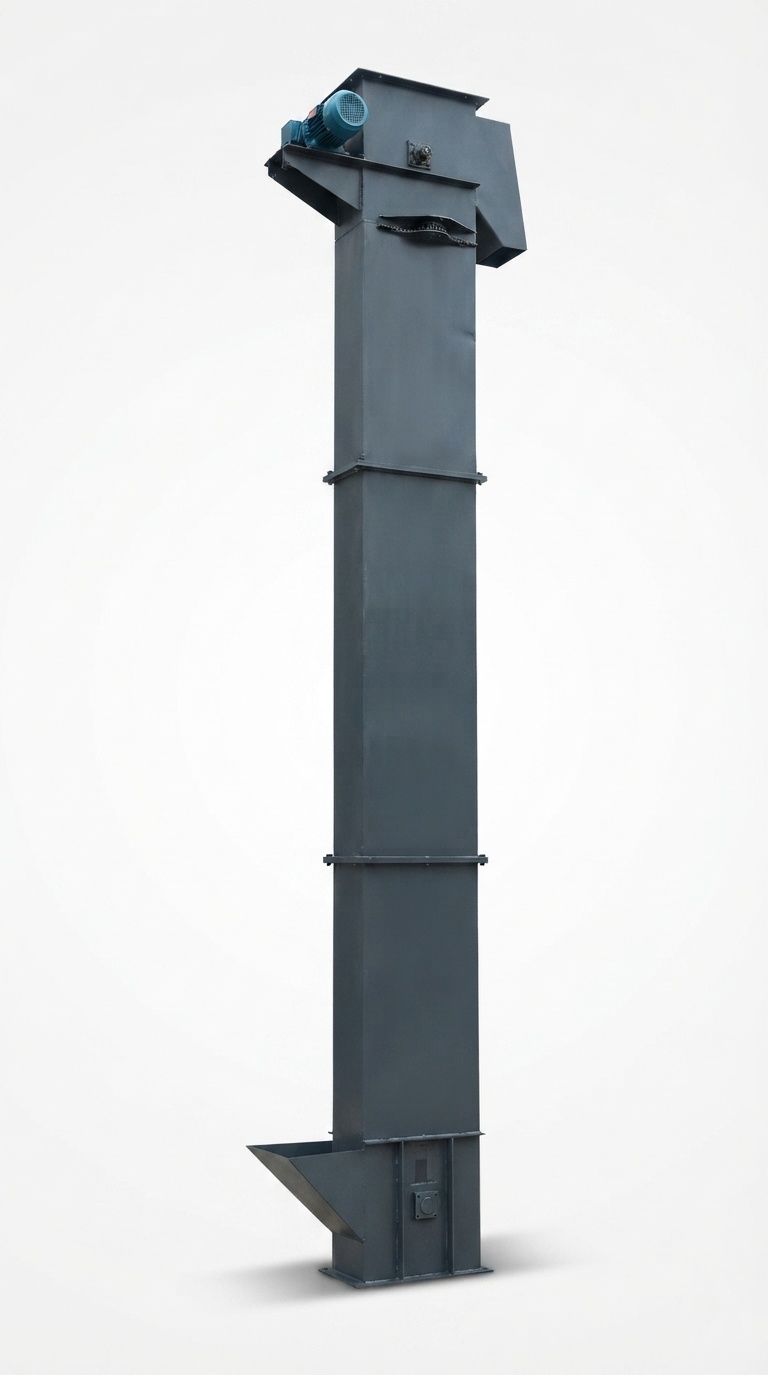
Double Chain Bucket Elevator
Various dense, abrasive, or high-temperature bulk solids are transported vertically upward in a completely sealed heavy-duty casing through synchronized dual-chain traction and precision-arranged steel buckets.
| Performance Parameter | Specification |
|---|---|
| Delivery volume | Up to 1500 m³/h |
| Lifting height | Up to 50 m |
| Material size | Max 35-60 mm |
| Drive power | Heavy-duty motor |
| Footprint | Customizable |
How a Heavy-Duty Double Chain Bucket Elevator Operates
A Double Chain Bucket Elevator is a continuous vertical lifting machine engineered for heavy-duty industrial applications. Unlike standard belt-driven systems that risk slipping under extreme loads, this robust equipment utilizes two parallel high-strength chains to suspend and elevate heavy bulk materials reliably to high elevations.
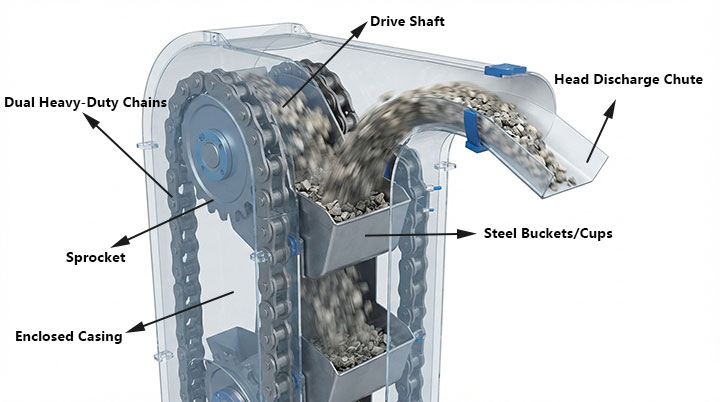
How it works in brief: Bulk materials are fed uniformly into the boot (base) of the elevator. The heavy-duty steel buckets, securely mounted across the dual chains, scoop up the material and travel vertically within the enclosed casing. Upon reaching the head section, centrifugal-gravity discharge throws and directs the materials smoothly into the upper discharge chute, ensuring continuous, high-capacity, and dust-free vertical transit.
Core Mechanics: Internal Structure & Continuous Vertical Workflow
The exceptional performance of a double chain bucket elevator relies on a tightly integrated structural system. Understanding its internal mechanics helps plant operators ensure seamless vertical integration.
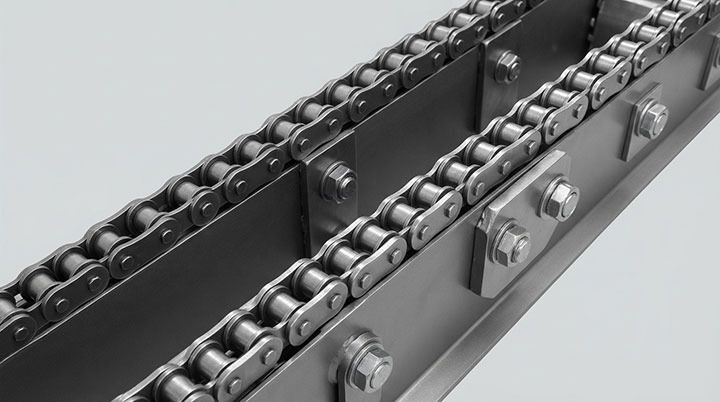
Dual-Chain Traction System: Two precision-machined parallel chains (alloy steel) evenly distribute the mechanical load, preventing sideways skewing and ensuring ultra-stable vertical lifting under heavy payloads.
Heavy-Duty Buckets: High-strength steel buckets are bolted securely across both chains, engineered to withstand continuous impact, high temperatures, and abrasive wear from coarse minerals.
Sealed Casing & Head/Boot Section: Dust-tight enclosures prevent material leakage into the plant environment, while the robust head and boot sections house the driving sprockets and adjustable tensioning device.
Workflow Summary: Continuous feeding at the boot → synchronized dual-chain vertical traction → high-speed head discharge → zero-spillage structural execution.
Why Upgrade to a Double Chain Design?
When selecting vertical transport equipment for demanding industrial environments, comparing the structural limits of different traction elements is crucial. Upgrading to a double chain design provides distinct operational advantages over traditional belt or single-chain elevators.
Higher Load Capacity
Dual parallel chains distribute heavy payloads evenly, handling extreme throughput demands for large-scale mining and cement plants.
Zero Belt Slippage
Unlike rubber belts that stretch or tear under friction, positive chain engagement guarantees reliable, synchronized vertical motion.
Extreme Heat Resistance
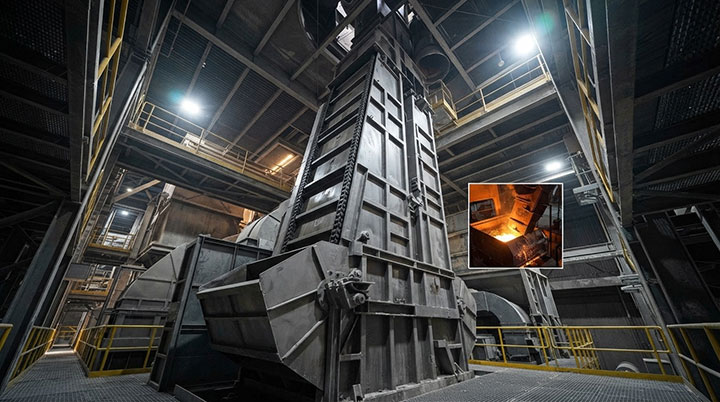
Built entirely from robust alloy metals, it safely transports high-temperature clinker and minerals that destroy standard rubber belts.
Anti-Skewing Stability
The dual-track mechanism prevents sideways shifting and structural deviation, maintaining stability during heavy-load operation.
Extended Service Life
Wear-resistant chains and heavy-duty steel buckets significantly reduce equipment wear and tear over years of continuous use.
Lower Maintenance Cost
Rugged components and easy-to-adjust tensioning systems minimize unplanned downtime, lowering long-term operating costs.
Application: Which Bulk Materials Are Best Suited for This Elevator?
Choosing the correct elevator model depends on the physical characteristics of your bulk materials. Based on our heavy-duty TH-series technical parameters, we have matched typical industrial materials with their optimal model sizes, bucket configurations, and structural material recommendations:
| Target Industry & Materials | Max Particle Size | Recommended TH Models | Bucket & Capacity Ref. | Material & Configuration Recommendation |
|---|---|---|---|---|
|
Cement Clinker & Raw Meal (High abrasive, high temp) |
Up to 35 - 50 mm | TH315, TH400, TH500 | SH/ZH type (3.75L - 15.0L) | Heat-resistant alloy steel casing, Hardox-reinforced steel buckets, and round steel chain ($18\times64$ or $22\times86$ mm). |
|
Limestone & Crushed Stone (Heavy dense minerals) |
Up to 40 - 60 mm | TH400, TH500, TH630 | Up to 23.6L (TH630 upgraded) | High-strength manganese steel buckets, heavy-duty dual round steel chains, impact-resistant boot design. |
|
Slag & Industrial Aggregates (Abrasive & sharp edges) |
Up to 25 - 35 mm | TH200, TH250, TH315 | ZH type (1.5L - 6.0L) | Wear-resistant alloy linings, anti-wear treated bucket lips to handle sharp aggregate friction. |
|
Coal Powder & Chemical Granules (Fine to medium bulk) |
Up to 20 - 30 mm | TH160, TH200, TH250 | ZH type (1.2L - 3.0L) | Dust-tight sealed carbon steel or optional stainless steel configuration to prevent powder leakage and corrosion. |
Engineering Advice: If your material density or required hourly capacity falls between standard models, our engineering team can customize the bucket spacing and motor power to match your exact plant layout.
Engineering Specifications & Customizable Configuration Parameters
To ensure seamless integration with your existing industrial plant layout, Dahan Machinery offers flexible configuration options across all critical components of the double chain bucket elevator:
Lifting Height & Casing Modules
Modular intermediate casing sections allow customizable total lifting heights based on your vertical clearance requirements.
Drive & Power Units
Equipped with heavy-duty industrial gear reducers and reliable motors, with optional explosion-proof certification for chemical environments.
Tensioning & Safety Devices
Includes a reliable screw or gravity take-up mechanism at the boot section, coupled with optional motion sensors and anti-deviation switches.
Discharge Control
Engineered for optimized centrifugal-gravity discharge to prevent material back-spilling and ensure smooth, continuous delivery.
Customization Scope: Whether you require specific voltage ratings, special paint coatings, or wear-resistant inner liners, our engineering department provides tailor-made design drawings before production.
Tailored Engineering: Integrating the Elevator Into Your Existing Plant Layout
Every industrial production line has unique spatial constraints, feeding heights, and discharge directions. Integrating a heavy-duty vertical lifting system without disrupting existing infrastructure requires precise engineering and custom adaptation.
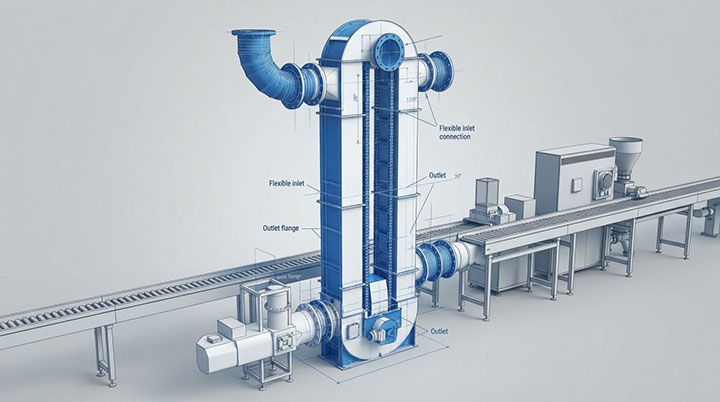
Site-Specific CAD Design: Our engineering team collaborates with your project managers to create tailored 3D layouts and CAD drawings, ensuring exact alignment with your workshop dimensions.
Flexible Inlet & Outlet Orientation: Inlets and discharge chutes can be customized in terms of angle, height, and flange connection to match your upstream and downstream equipment seamlessly.
Structural Load & Space Optimization: We analyze your structural weight limits and spatial clearances to design compact, high-efficiency footprints that minimize modification costs.
Engineering Support: Send us your plant layout sketches or process flow requirements, and our technical department will provide a complete structural integration proposal and quotation within one business day.
Why Choose Dahan Machinery as Your Supplier?
Partnering with a reliable direct manufacturer is essential for ensuring equipment quality, cost-effectiveness, and dependable after-sales support. As an established industrial machinery manufacturer, Dahan Machinery delivers proven value to global plant operators.
- Direct Factory Manufacturing: Eliminate middleman markups. We control every stage from raw material selection and precision cutting to assembly and rigorous factory testing.
- Proven Global Export Experience: Our heavy-duty industrial equipment is successfully operating in numerous international plants, backed by robust export packaging and logistics support.
- Rigorous Quality Control: Every double chain bucket elevator undergoes strict operational testing and inspection before leaving our facility to ensure flawless on-site performance.
- Comprehensive Technical Support: From pre-sale model selection and 3D layout design to remote installation guidance and spare parts availability, we ensure long-term operational peace of mind.
Partner with Us: Contact our engineering and sales team today to discuss your project requirements and discover how our custom vertical transport solutions can optimize your production line.
Frequently Asked Questions on Selection & Maintenance
What is the main difference between a double chain and a rubber belt bucket elevator?
A double chain bucket elevator uses dual parallel high-strength steel chains to handle heavy payloads, high temperatures, and abrasive materials without the risk of belt stretching, tearing, or slipping common in rubber belt systems.
Can a double chain bucket elevator handle high-temperature materials like cement clinker?
Yes. By utilizing heat-resistant alloy steel components and specialized heavy-duty buckets, it can safely and continuously transport high-temperature materials (such as cement clinker and slag) up to 250°C or higher.
How do I select the right model (e.g., TH series) for my production line?
Model selection depends primarily on your required hourly capacity (t/h), lifting height, material bulk density, and maximum particle size. You can refer to our technical parameter matrix or send us your plant layout for a custom engineering recommendation.
What maintenance is required for the dual-chain system?
Routine maintenance includes checking chain tension via the boot take-up mechanism, inspecting bucket bolts, and monitoring lubrication on drive components to ensure long-term, trouble-free operation.
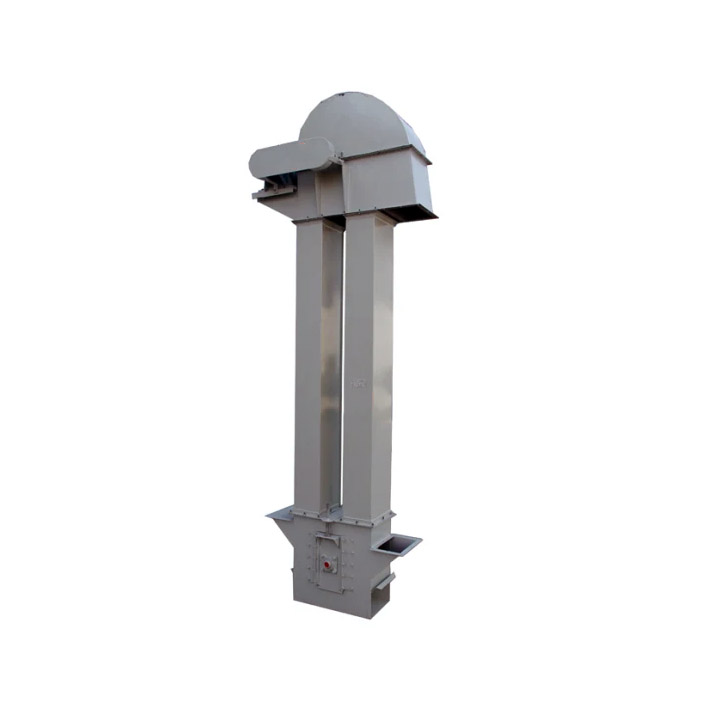 Small Bucket Elevator
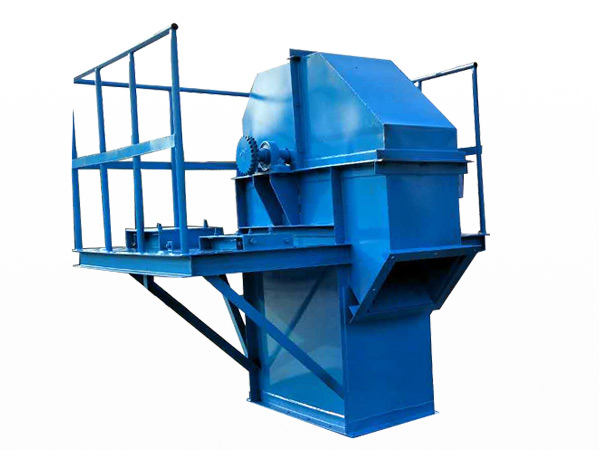 Chain Type Bucket Elevator
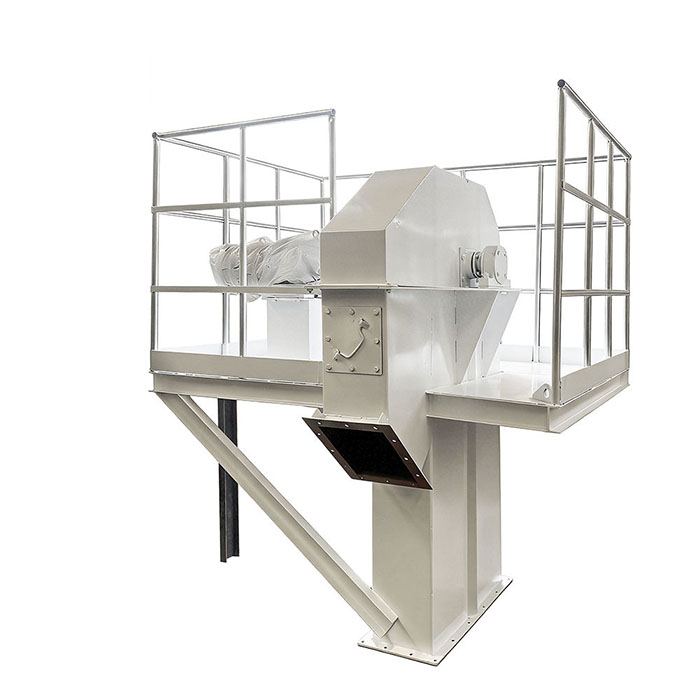 NE Plate Chain Bucket Elevator for Limestone
Products
Hot Modules
locations


headquarters
Address:China,Yanjin county forest park gate to the west 1000 meters north road.