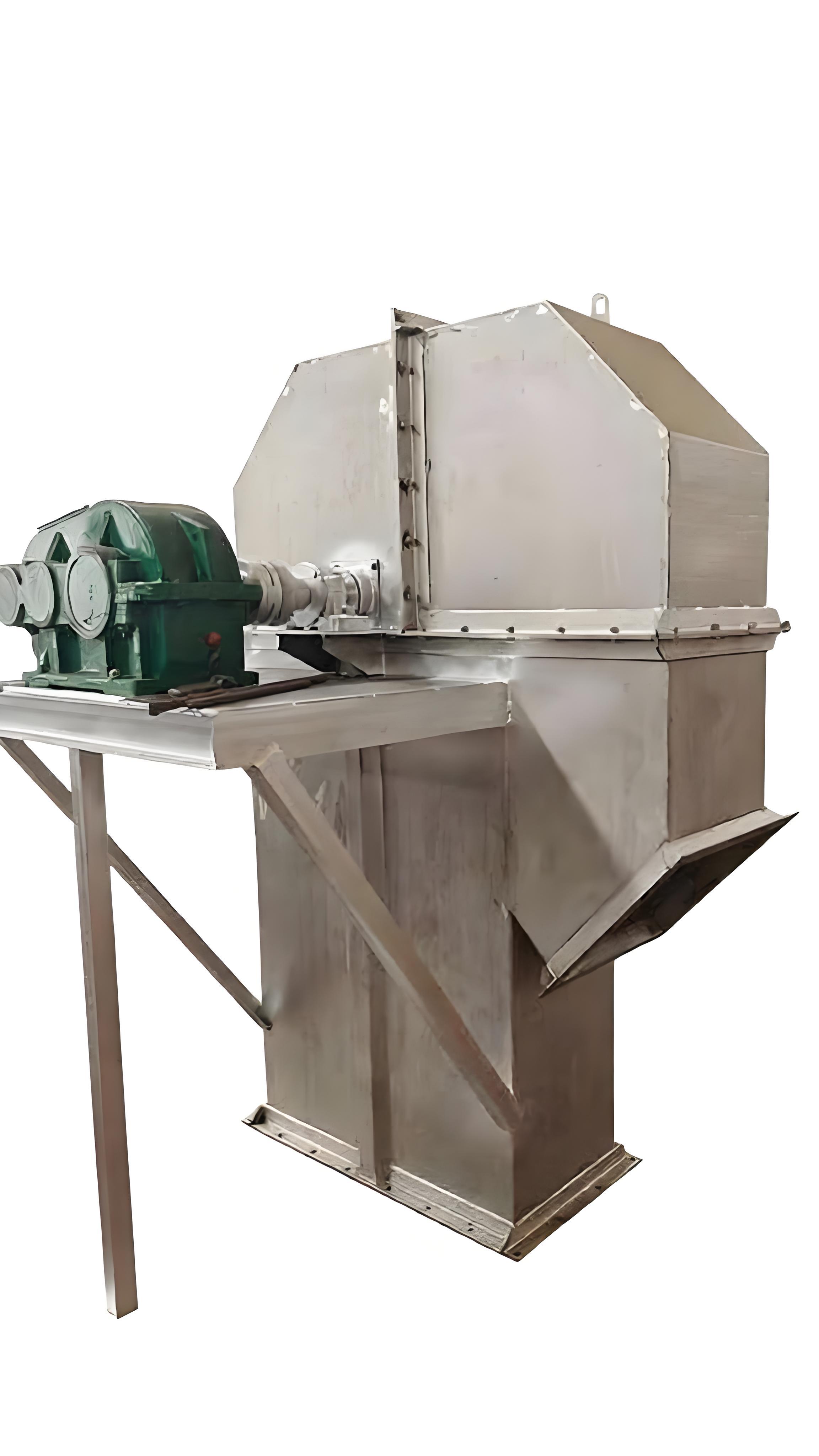
Continuous Discharge Bucket Elevator
Low-speed operation (100–200 FPM) with gravity-assisted material flow,
breakage reduced by 2%–5% compared to centrifugal designs.
Low-speed operation minimizes component wear and extends equipment life
No high-speed throwing action – prevents aeration and reduces dust.
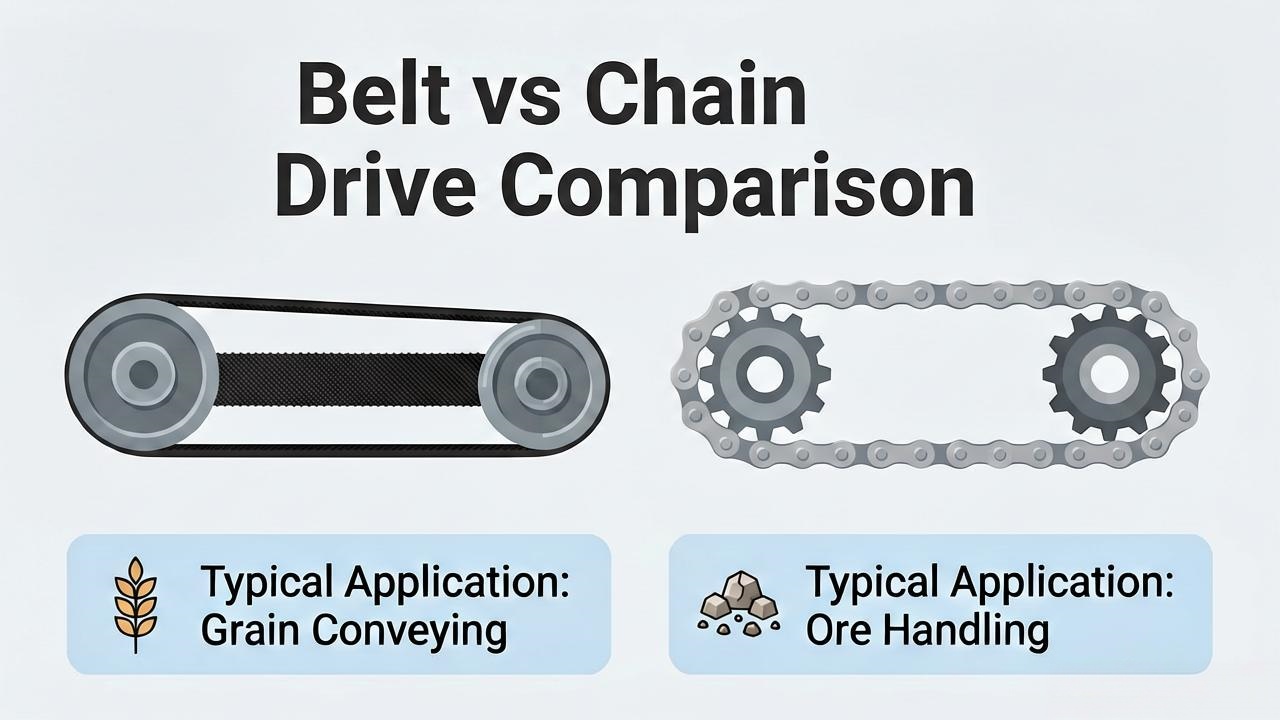
Belt drive: cost-effective, low noise – ideal for grain and food processing.
Chain drive: higher capacity, heat-resistant – suitable for mining, cement, heavy industry.
Bucket styles: MF (general-purpose), HF (high-front for better containment), SC (super-capacity for higher throughput).
Suitable materials: aggregates, fertilizers, minerals, potash, lime, coal, woodchips, chemical powders.
Not recommended for wet, sticky, or sludge-like materials.
Capacity: 5–200 TPH (customizable); lifting height: up to 40 meters.
Casing materials: carbon steel, stainless steel, galvanized steel.
Designed to CEMA standards; low-speed operation reduces maintenance costs.
Product Overview
When selecting a bucket elevator, one of the first and most critical decisions is choosing between centrifugal and continuous discharge designs. The choice depends largely on your material characteristics.
A continuous discharge bucket elevator is the ideal solution for fragile, abrasive, sluggish, or aeratable materials where product degradation must be minimized. Unlike centrifugal designs that use high‑speed throwing action, continuous discharge elevators operate at slower speeds (100–200 FPM) with closely spaced buckets, allowing material to gently cascade from one bucket to the next.
This guide covers how continuous discharge bucket elevators work, their advantages, applications, and how to determine if they are the right fit for your operation.
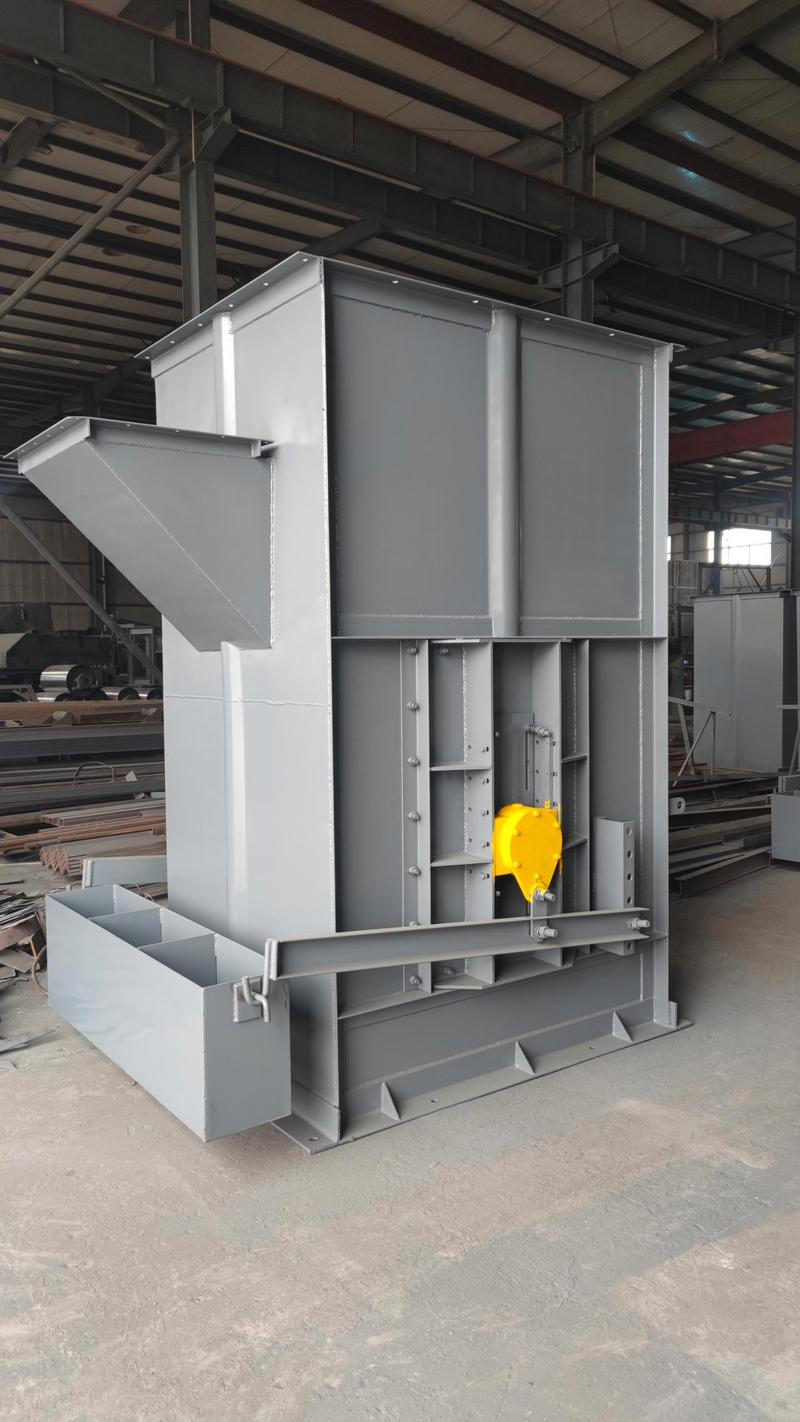
How It Works
Material enters through a feed chute at the boot section, where buckets are loaded directly rather than scooping from a boot pit. Filled buckets travel upward inside the enclosed casing at slow speed (100–200 FPM), ensuring stable material retention.
At the head section, discharge is gravity‑driven. As each bucket passes over the head pulley and inverts, the front lip acts as a guide for material sliding out of the bucket above it. Material flows over the backside of the preceding bucket, whose extended side walls form a natural chute directing the cascade into the discharge spout. This creates a continuous, gentle discharge—no "throwing" action, no impact damage.
Key Advantages
- Gentle handling – Gravity discharge minimizes degradation; breakage reduced by 2–5% versus centrifugal designs.
- Slower speed – 100–200 FPM reduces wear on belts, chains, buckets, and casings.
- Prevents aeration – Avoids introducing air into light, fluffy materials.
- Ideal for abrasive materials – Eliminates high‑velocity impact that causes premature wear.
- Reduced dust – Minimizes dust creation, improving safety.
- Versatile configurations – Belt, single chain, or double chain drives available.
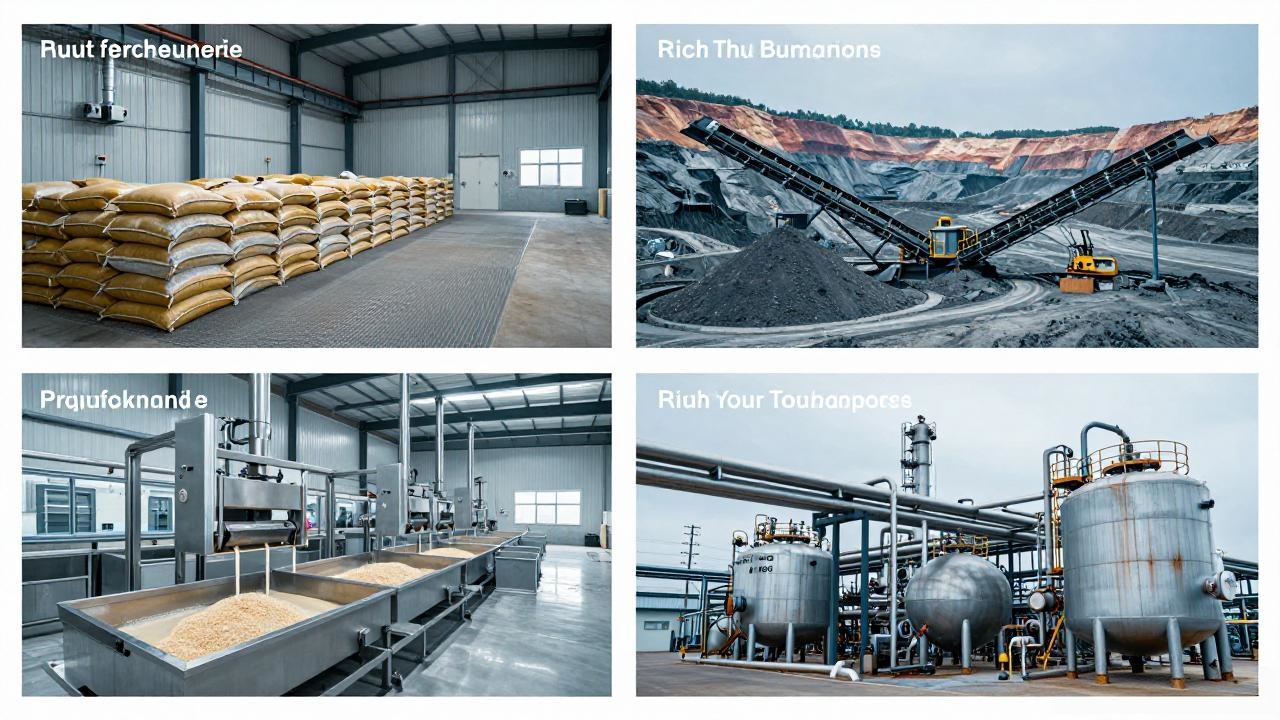
Applications & Industries
Industries: Agriculture, food processing, fertilizer production, mining, chemical, power generation, pulp & paper.
Suitable materials: Aggregates, fertilizers, minerals, potash, lime, coal, woodchips, chemical powders.
Not recommended: Wet, sticky, or sludge‑like materials that adhere to buckets and casings.
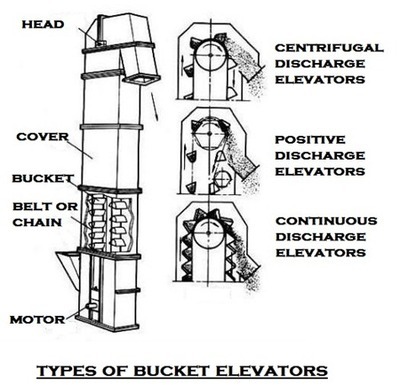
Discharge Type Comparison
| Feature | Continuous | Centrifugal | Positive Discharge |
| Speed | 100–200 FPM | 200–500 FPM | Slow |
| Capacity | 5–200 TPH | 10–1,000+ TPH | Low–moderate |
| Loading | Direct chute | Scooping | Direct chute |
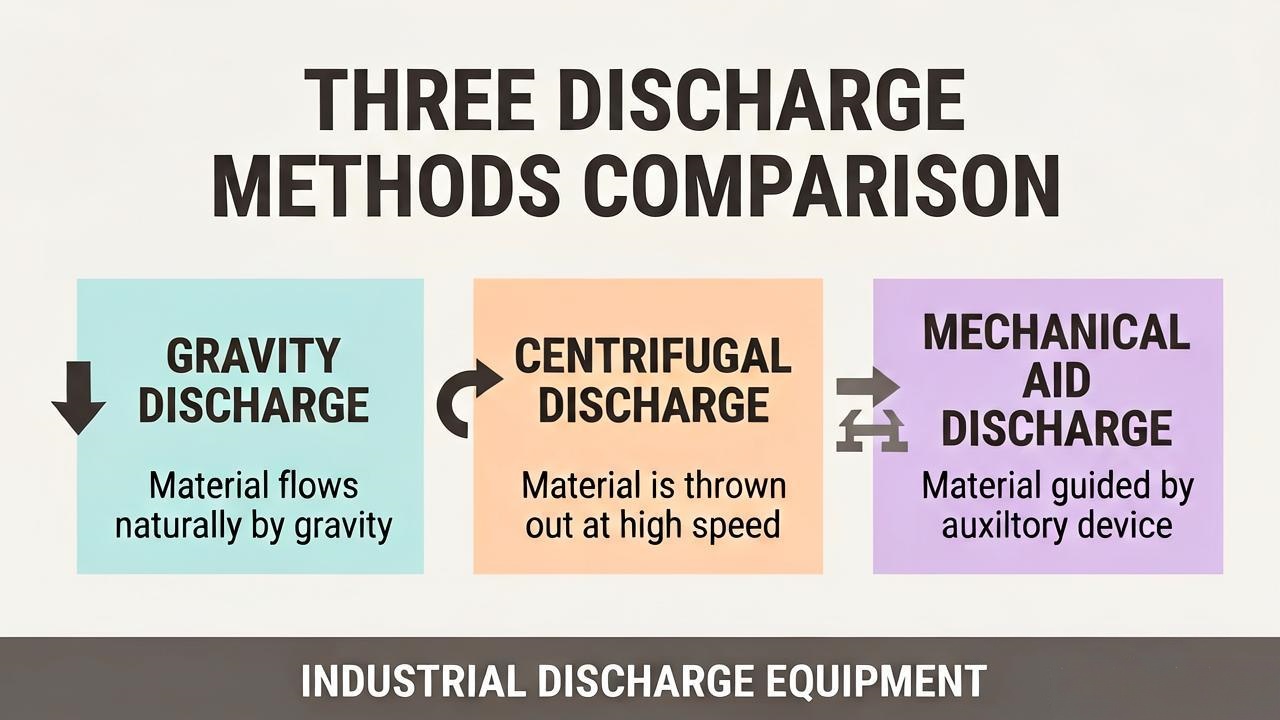
| Discharge | Gravity cascade | Centrifugal force | Mechanical assist |
| Best For | Fragile, abrasive, aeratable | Free‑flowing, durable | Sticky, cohesive |
| Degradation | Minimal | Moderate–high | Low |
| Dust | Low | Higher | Low |
Choose continuous when fragility, abrasiveness, or aeration is a concern.
Choose centrifugal when throughput is the priority and material is durable.
Choose positive discharge for sticky or sluggish materials.
How to Choose the Right Elevator
Work through this checklist to define your requirements:
- Material type – Free‑flowing, abrasive, fragile, sticky, or aeratable?
- Material density – Weight in lbs/ft³ (determines horsepower and bucket sizing).
- Throughput – Maximum rate in tons or cubic feet per hour.
- Particle size – Maximum size and percentage of lumps.
- Operating conditions – Indoor/outdoor? Corrosive? Temperature extremes?
- Service requirement – Continuous or intermittent?
Choose continuous discharge when:
- Material breakage must be minimized;
- Product is abrasive (causes rapid wear in high‑speed systems);
- Material is light and prone to aeration;
- Dust generation is a safety concern.
The Cost of Getting It Wrong
Selecting the wrong elevator type has serious consequences:
- Product Degradation – Centrifugal elevators crush fragile materials, causing 5–10% product loss.
- Excessive Wear – Abrasive materials in high‑speed systems cut component life in half.
- Reduced Efficiency – Wrong selection can reduce throughput by up to 30%.
- Unnecessary Maintenance – Operating outside optimal range increases downtime and costs.
Working with an experienced manufacturer ensures the design matches your process requirements.
Bucket Style Options
Three primary bucket styles are available:
- Medium‑Front (MF) – Standard profile for general‑purpose handling.
- High‑Front (HF) – Extended front wall for materials requiring additional containment.
- Super‑Capacity (SC) – Larger volume for higher throughput.
All styles are available for both belt and chain elevators.
Belt vs. Chain Drives
Belt‑driven – Cost‑effective for lighter‑duty jobs. Rubber/PVC belting provides quieter operation and lower initial cost. Ideal for grain and food processing.
Chain‑driven – Higher capacity and durability. Best for rugged handling of large particles, heated materials, or abrasive conditions. Serves cement, mining, and heavy industrial applications.
Technical Specifications
| Parameter | Typical Range |
| Capacity | 5–200 TPH (customizable) |
| Lifting Height | Up to 40 meters |
| Speed | 100–200 FPM |
| Drive | Belt, single chain, or double chain |
| Bucket Styles | MF, HF, SC |
| Bucket Materials | Steel, nylon, polyurethane, malleable iron |
| Casing Materials | Carbon steel, stainless steel, galvanized steel |
Custom configurations available. Designed to CEMA standards.
Maintenance & Cost of Ownership
The slower speed of a continuous discharge elevator reduces component wear, extending replacement intervals and lowering costs.
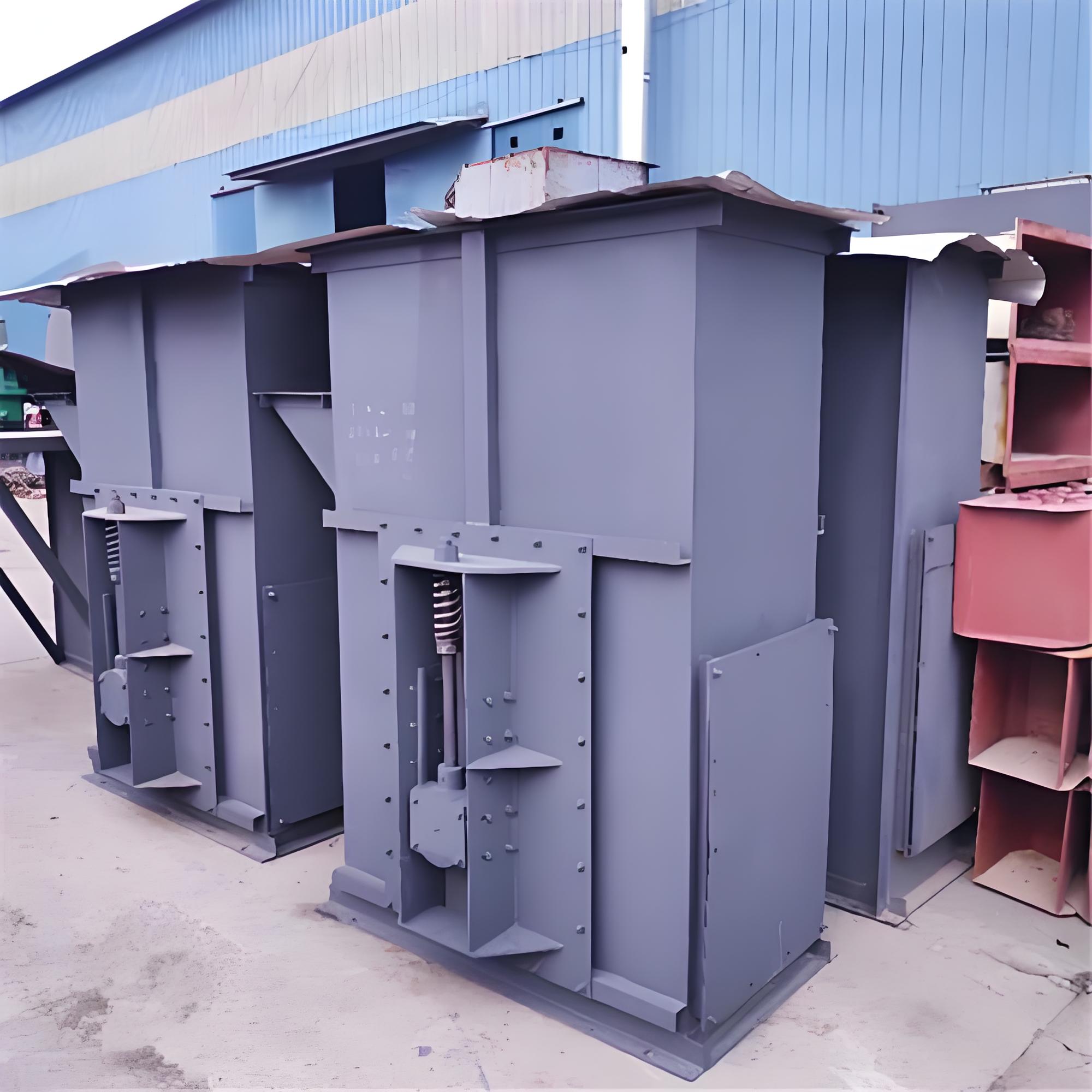
Key practices: Inspect belts/chains for tension and wear, check buckets for damage, monitor bearings, inspect casing, verify discharge spout is clear.
Cost‑saving insight: Extended replacement intervals mean lower total cost of ownership over the equipment lifecycle.
Summary
The continuous discharge bucket elevator delivers gentle, reliable vertical conveying for fragile, abrasive, and aeratable materials. Its slow‑speed gravity discharge protects product integrity while reducing wear and maintenance costs. Choose it when gentle handling is paramount—and avoid costly mistakes by matching the design to your material characteristics.
Products
Hot Modules
locations


headquarters
Address:China,Yanjin county forest park gate to the west 1000 meters north road.