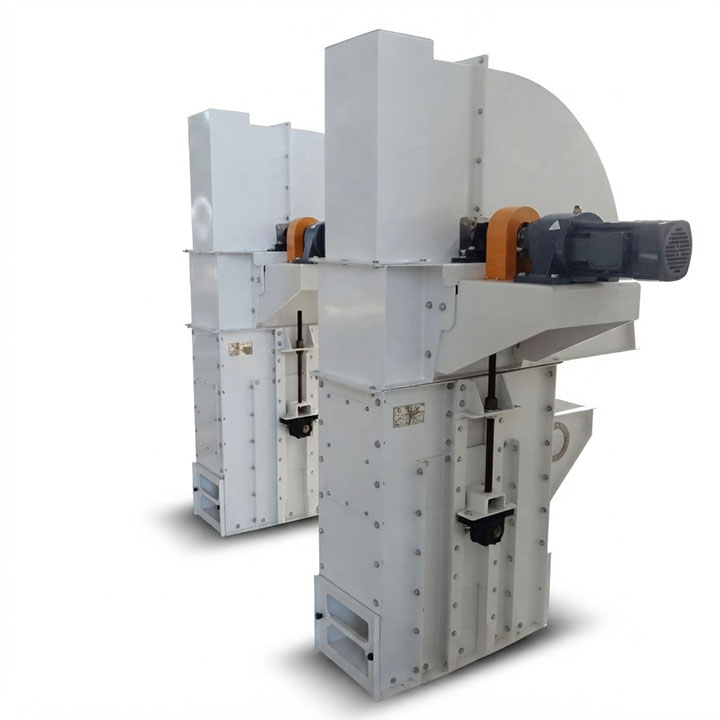
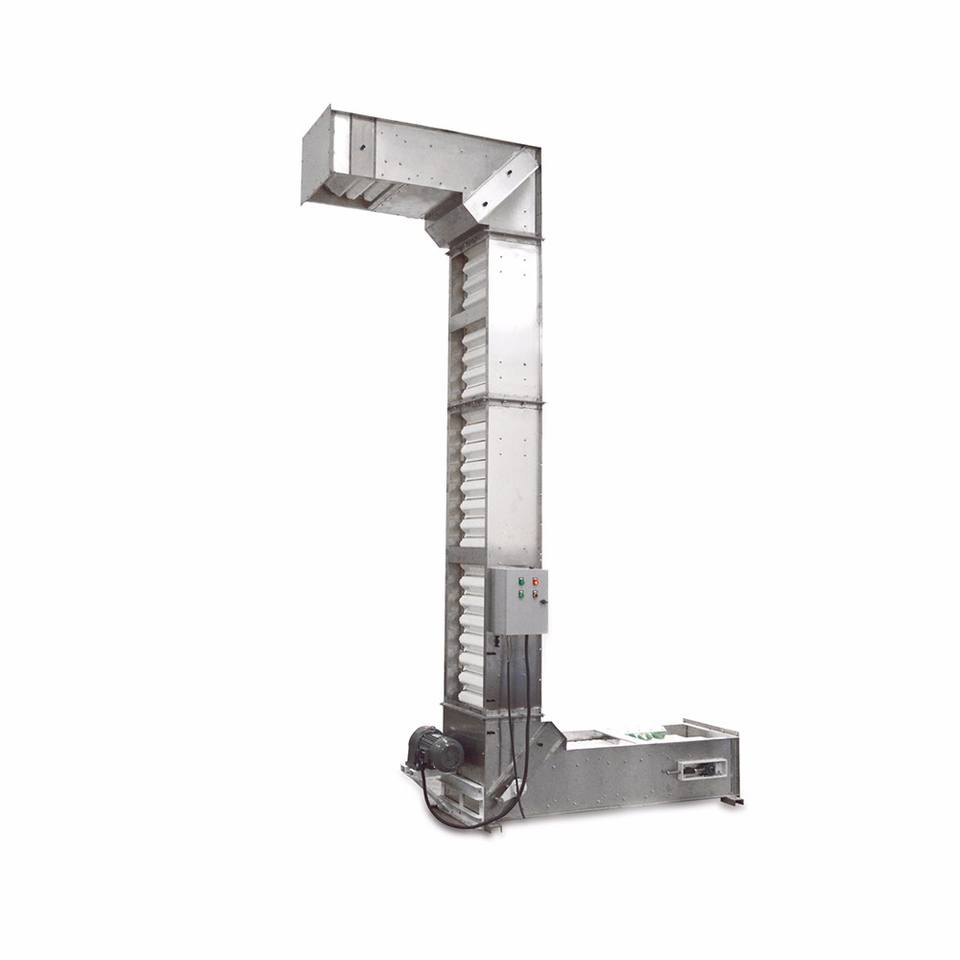
Centrifugal Discharge Bucket Elevator
It is engineered to transport dry, free-flowing, and granular or powdered bulk materials efficiently at high speeds, utilizing centrifugal force for smooth and reliable vertical discharge.
| Handling Capacity | Up to 500 m³/h |
| Lifting Height | Up to 50+ meters |
| Belt Speed | 225 - 300 fpm |
| Bucket Layout | Spaced design |
| Drive Options | Belt / Chain |
What is a Centrifugal Discharge Bucket Elevator?
A centrifugal discharge bucket elevator is a heavy-duty vertical material handling system designed to transport dry, free-flowing, and granular or powdered bulk materials. Operating at a high linear speed, it utilizes centrifugal force to throw material out of the buckets smoothly as they pass over the head sprocket or pulley.Unlike slow-speed continuous models, this equipment spaces buckets apart along a durable belt or chain. It is the industry-standard solution for high-capacity, vertical lifting across industrial processing plants.
How Centrifugal Force Powers Vertical Lifting
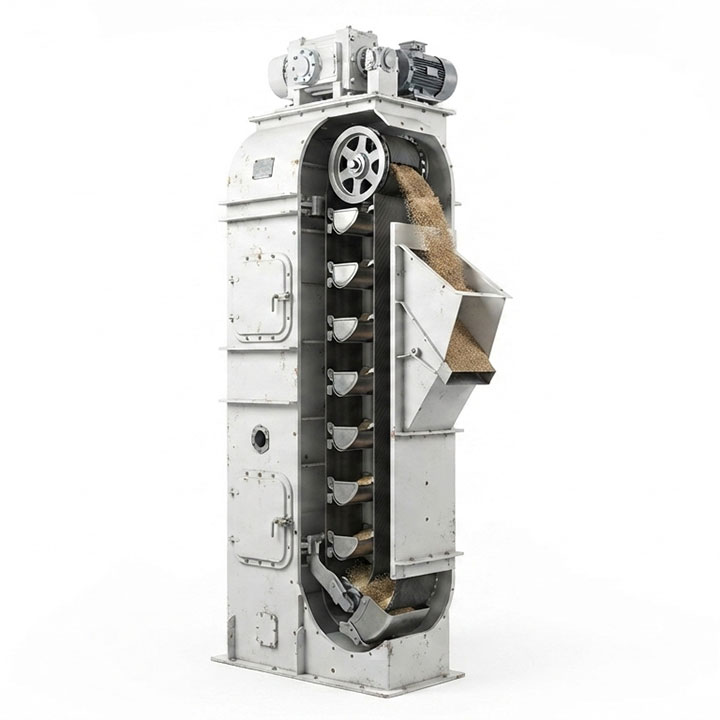
The operation of a centrifugal discharge bucket elevator relies on a precise balance of mechanical speed, bucket spacing, and gravitational forces:
- Material Scooping (Boot Section): As buckets travel around the bottom boot pulley, they scoop or dredge bulk materials directly from the loose accumulation at the base.
- Vertical Conveying (Casing): The loaded buckets are hauled vertically upward through an enclosed, dust-tight steel casing by a robust belt or chain traction element.
- Centrifugal Discharge (Head Section): Upon reaching the head pulley, the high linear speed (typically 225 to 300 fpm) generates sufficient centrifugal force to throw the material out of the buckets in a controlled parabolic trajectory into the discharge chute.
Performance Specifications & Heavy-Duty Mechanical Features
Designed for continuous industrial operation, our centrifugal bucket elevators combine high-throughput capacity with rugged structural integrity. Key specifications and build features include:
| Technical Parameter | Specification Range |
|---|---|
| Handling Capacity | Up to 500 m³/h (depending on material density and bucket size) |
| Lifting Height | Customizable up to 50+ meters (application-dependent) |
| Belt Speed | 225 to 300 fpm (optimized for centrifugal throw) |
| Bucket Types | Style AA pressed steel or heavy-duty polyethylene (spaced layout) |
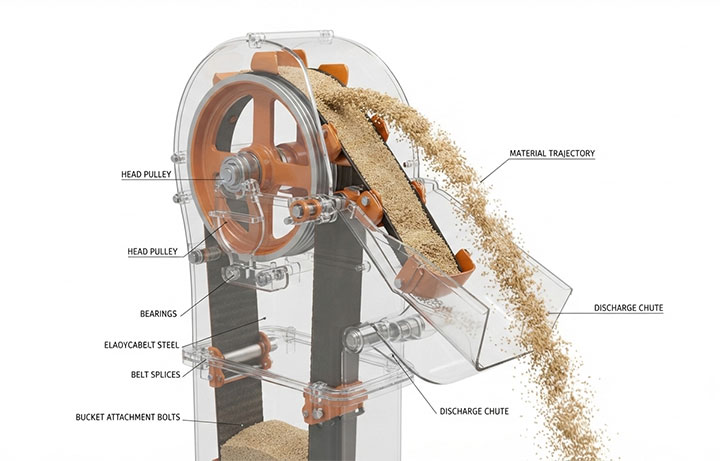
Core Mechanical Build: Features a dust-tight enclosed steel casing, heavy-duty head and boot sections with inspection doors, precision pillow-block bearings, and an integrated mechanical backstop to prevent reverse rolling during power interruptions.
Ideal Materials for Centrifugal Discharge Elevators
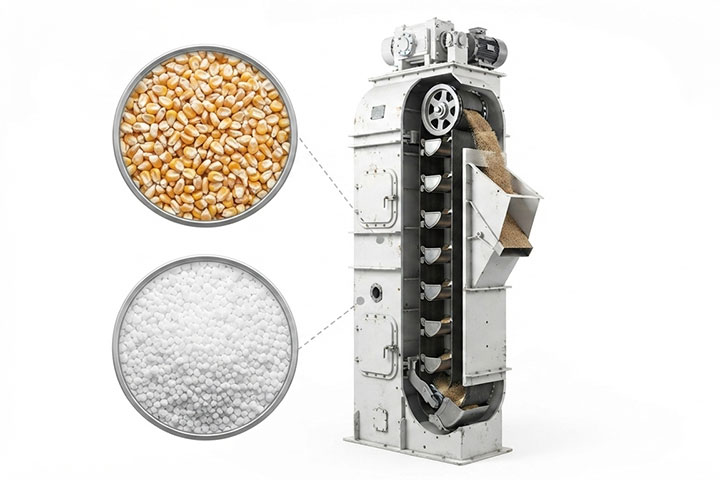
Centrifugal discharge bucket elevators are engineered specifically for dry, free-flowing, and granular or fine powdered materials that do not easily pack or fracture under high-speed handling. Ideal industrial applications include:
- Agrichemicals & Fertilizers: Chemical granules, urea, phosphate, and potash.
- Aggregates & Mining: Dry sand, gravel, limestone, crushed stone, and cement clinker.
- Grain & Food Processing: Grains, seeds, corn, beans, and animal feed.
- Industrial Minerals: Salt, soda ash, quartz, and various dry powders.
Note: Fragile materials prone to breakage or sticky, high-moisture materials are generally better suited for continuous-discharge or alternative handling systems.
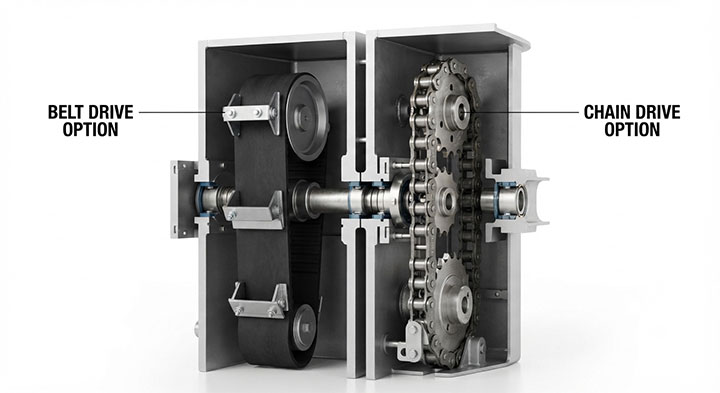
Design Configuration Choices: Selecting the Right Traction Element (Belt vs. Chain)
Choosing the correct traction element is vital for optimizing elevator lifespan and operational efficiency. We offer two primary configuration options:
- Belt-Driven Elevators: Ideal for high-speed, standard-capacity operations. Utilizing heavy-duty rubber or PVC elevator belts, this option offers smooth running, easy maintenance, and reduced wear on buckets when handling non-abrasive or moderate-abrasive granules.
- Chain-Driven Elevators: Engineered for heavy-duty, high-temperature, or severe industrial environments. Using rugged industrial chains (such as single or double strands), this option provides maximum tensile strength and positive engagement for dense, heavy, or abrasive materials.
Custom Engineering Capabilities for Our Bucket Elevators
Every industrial processing plant has unique spatial constraints and material flow requirements. As an experienced direct manufacturer, we provide fully customized engineering solutions tailored to your exact facility layout:
- Structural Customization: Tailored casing heights, discharge chute angles, and inlet/outlet positioning to fit your existing plant footprint.
- Material Selection: Choice of carbon steel, wear-resistant alloy steels, or stainless steel construction for corrosive or sanitary environments.
- Accessory Integration: Optional safety monitoring devices including belt misalignment switches, motion sensors (zero-speed switches), and explosion-relief vents.
Integration with Complete Material Handling Systems
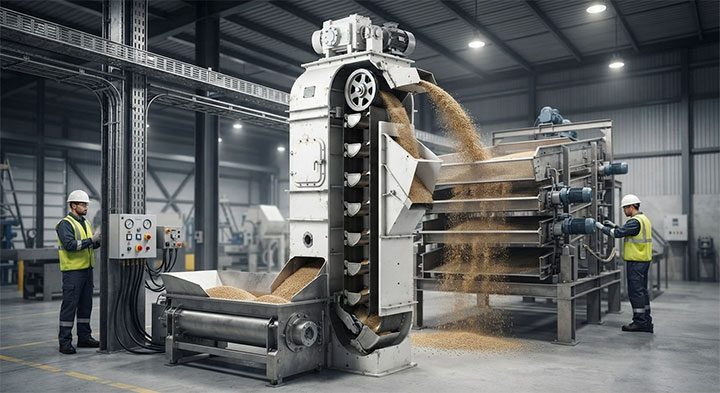
A centrifugal discharge bucket elevator rarely operates as a standalone unit. To maximize plant productivity and ensure smooth material flow, it can be seamlessly integrated into your complete processing and conveying workflow:
- Upfeed Connection: Pairs efficiently with vibrating feeders or screw conveyors to ensure a steady, regulated feed rate into the boot section.
- Downstream Screening & Separation: Discharges lifted materials directly into industrial vibrating screens, rotary sifters, or sorting systems for precise grading.
- Storage & Packaging: Connects overhead discharge chutes straight to silos, weighing hoppers, or automated bagging lines.
Engineering FAQ: Sizing, Speed, and Maintenance Insights
How do I calculate the required capacity for a bucket elevator?
Capacity is calculated based on the required hourly throughput (t/h or m³/h), material bulk density, bucket volume, and bucket spacing. Our engineering team can perform a precise sizing calculation based on your specific application.
Why is belt speed critical for centrifugal discharge?
The high linear speed (typically 225-300 fpm) generates the necessary centrifugal and gravitational acceleration to throw material cleanly out of the buckets into the discharge chute without back-spilling.
What maintenance checks are essential for reliable operation?
Regular inspections should include checking belt tension or chain wear, monitoring bearing temperatures, testing safety sensors (such as zero-speed and misalignment switches), and inspecting the boot section for material buildup.
Tailored Engineering: Request Your Custom Bucket Elevator Technical Proposal
Ready to optimize your material handling workflow? Send us your material specifications, bulk density, and required lifting height. Our engineering team will provide a comprehensive layout and capacity assessment tailored to your facility.
- Free Technical Consultation: Professional sizing and configuration support.
- Custom CAD / Layout Drawings: Tailored integration to fit your plant footprint.
- Rapid Response: Detailed technical proposals and quotations delivered promptly.
Products
Hot Modules
locations


headquarters
Address:China,Yanjin county forest park gate to the west 1000 meters north road.