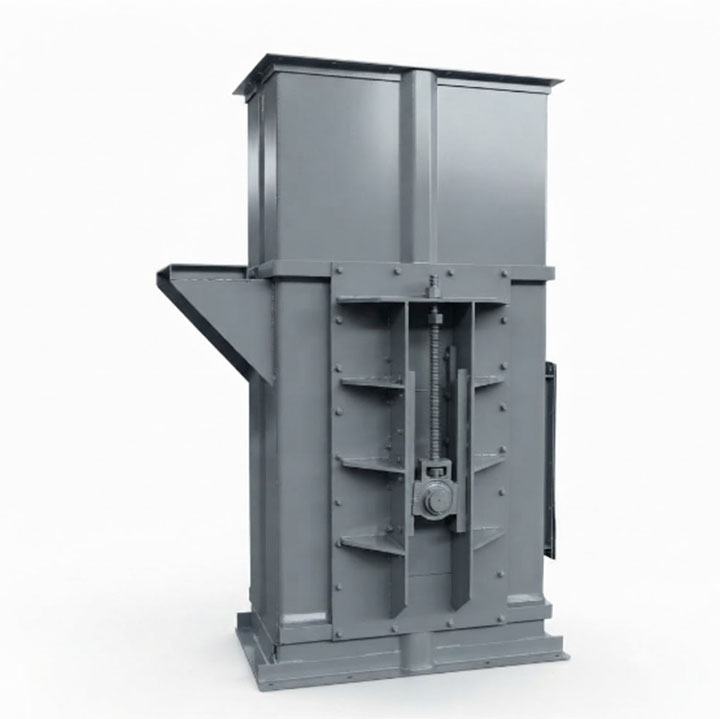
Agricultural Bucket Elevator
An agricultural bucket elevator (also known as a grain leg) is a heavy-duty vertical material handling system designed to transport bulk grains, seeds, and feed vertically. It seamlessly lifts materials from ground level to storage silos or processing units with minimal grain breakage and continuous throughput.
- Capacity: Up to 300 t/h (11,000 BU/h)
- Lifting Height: Up to 50 meters
- Grain Damage Rate: ≤ 0.5%
- Drive Type: Direct Head Drive / Gear Reducer
What is an Agricultural Bucket Elevator & How Do the Discharge Types Work?
An agricultural bucket elevator operates on a continuous loop system. Bulk materials are fed into the boot (bottom section) at ground level, scooped up by mounted buckets attached to a heavy-duty belt or chain, and vertically elevated to the head section where they are discharged into storage or processing lines.
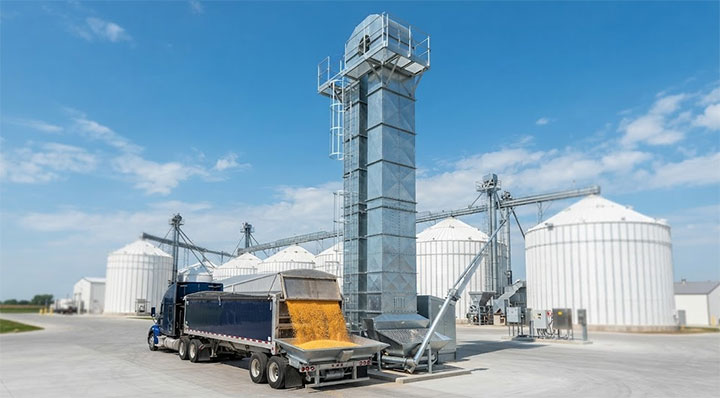
Core Discharge Types in Grain Handling:
- Centrifugal Discharge: The most common design for general grain and seed elevators. Buckets are spaced apart, and materials are discharged by centrifugal force as they pass over the head pulley.
- Continuous Discharge: Designed for fragile seeds or high-capacity operations. Buckets are closely spaced to form a chute, allowing smooth, gentle gravity-assisted discharge to prevent grain cracking.
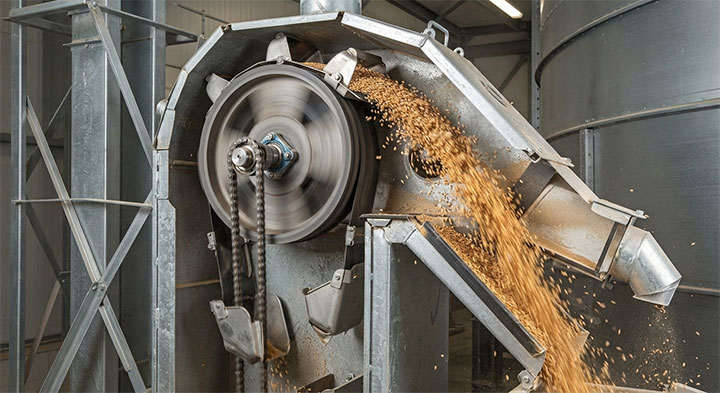
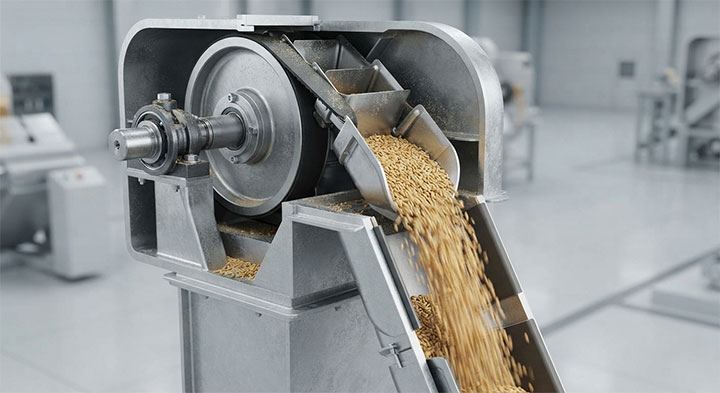
Technical Specifications, Capacity & Model Selection Table
Reference our standard agricultural bucket elevator specifications below, designed for grains, seeds, and bulk agricultural products. Custom heights and stainless-steel builds are available upon request.
| Model | Hopper Type | Capacity (t/h) | Hopper Volume (L) | Lifting Height (m) | Motor Power (kW) |
|---|---|---|---|---|---|
| TH160 | Medium-Deep / Deep Bucket | 5.0 - 15.8 | 1.2 - 1.9 | ≤ 50 | 3.0 - 11.0 |
| TH200 | Medium-Deep / Deep Bucket | 12.0 - 28.6 | 1.5 - 2.4 | ≤ 50 | 4.0 - 15.0 |
| TH315 | Medium-Deep / Deep Bucket | 17.0 - 59.0 | 3.75 - 6.0 | ≤ 50 | 7.5 - 22.0 |
| TH400 | Deep Bucket | 24.0 - 94.0 | 9.5 | ≤ 50 | 15.0 - 30.0 |
Engineering Anatomy: Key Structural Components of Our Grain Elevators
A reliable agricultural bucket elevator relies on heavy-duty engineering and precision manufacturing across its primary sections:
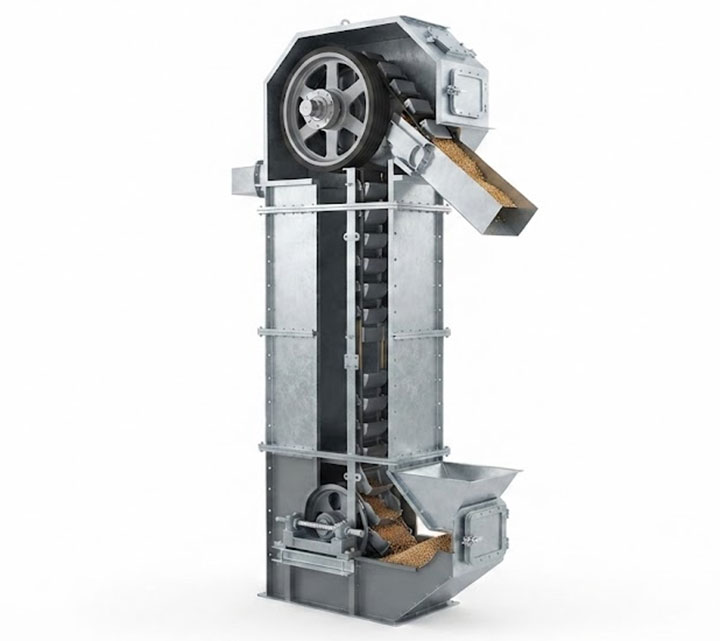
Head Section (Discharge Head)
Equipped with an anti-wear baffle plate and a large-diameter drive pulley to ensure smooth, uniform material discharge without material back-spilling.
Trunk / Casing (Middle Section)
Fabricated from heavy-gauge galvanized or carbon steel with dust-tight flanged connections, preventing grain leakage and external moisture entry.
Boot Section (Inlet & Tension)
Features a clean-out door, gravity or screw take-up tensioning system for the belt/chain, and an optimized feeding hopper to minimize initial grain cracking.
Buckets & Traction System
High-strength polymer (HDPE/Nylon) or heavy-duty steel buckets mounted securely on oil-resistant, anti-static elevator belts or high-grade steel chains.
Built for Durability: Why Global Grain Plants Choose Our Bucket Elevators
Engineered for continuous, heavy-duty operation in demanding agricultural environments, our bucket elevators deliver exceptional long-term value:
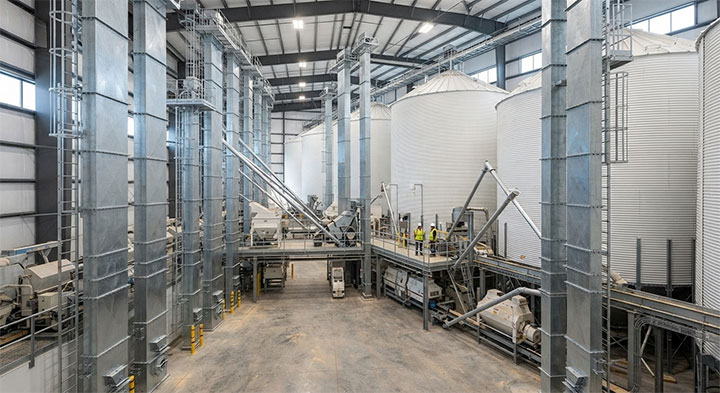
High Handling Capacity
Designed for large-scale grain terminals and storage plants, maintaining steady throughput ranging from 5 to over 200 tons per hour.
Low Grain Breakage Rate
Optimized bucket speeds and smooth interior geometry prevent grain cracking, ensuring your harvested crops maintain top commercial quality.
Dust-Tight & Weatherproof
Fully sealed housing construction prevents dust emissions and protects sensitive agricultural materials from outdoor moisture and rain.
Low Maintenance Operations
Heavy-duty bearings, wear-resistant components, and easy-access inspection doors reduce downtime and routine maintenance effort.
Anti-Explosion Safety Configurations & Industry Compliance Standards
Grain and agricultural dust safety is critical. Our bucket elevators are engineered with advanced safety monitoring systems to protect your facility:
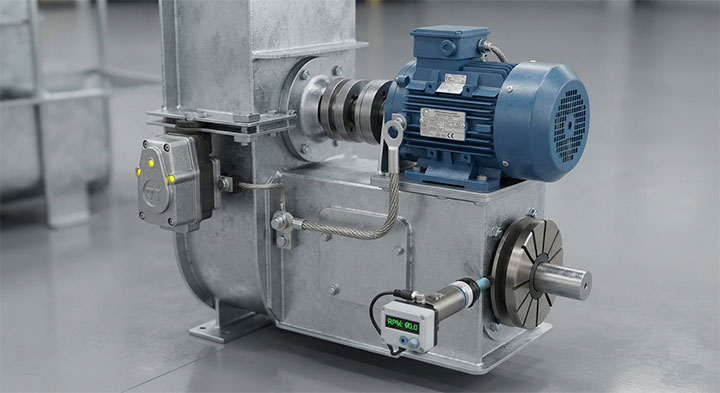
Explosion-Proof Electricals
Optional ATEX or explosion-proof motors and switches designed to operate safely in combustible grain dust environments.
Advanced Safety Sensors
Equipped with belt alignment (misalignment) sensors, rotation speed monitors, and bearing temperature detectors to prevent mechanical failures.
Anti-Static Components
Utilizes anti-static belts and grounded steel casings to eliminate static electricity buildup, preventing dust ignition hazards.
International Standards
Manufactured to rigorous international quality control and safety standards, ensuring seamless integration into global industrial projects.
Primary Applications: From Commercial Grain Silos to Feed Processing
Our agricultural bucket elevators are versatile, heavy-duty vertical transport solutions widely deployed across various sectors of the grain and agricultural industry:
- Commercial Grain Silos: Used for the high-volume vertical intake and discharge of wheat, corn, rice, and soybeans in large-scale grain storage facilities.
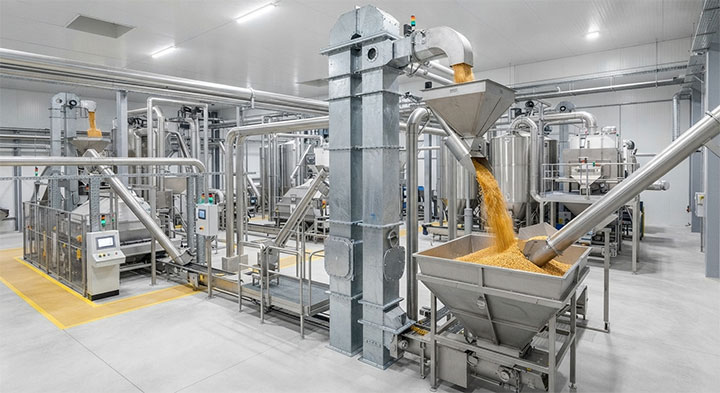
- Feed Processing Plants: Integrates seamlessly into animal feed production lines to lift raw ingredients and finished pelleted feeds between processing stages.
- Seed Processing Plants: Gentle handling configurations designed specifically for seed cleaning and packaging lines, protecting germination rates by minimizing damage.
- Oilseed Processing Facilities: Reliable vertical lifting of oilseeds like rapeseed, sunflower seeds, and peanuts prior to oil extraction and pressing stages.
Expert Answers to Frequently Asked Questions (FAQ) on Grain Elevators
Find expert answers to common technical and operational questions regarding our agricultural bucket elevators:
How can I prevent grain damage when using a bucket elevator?
Grain damage can be minimized by selecting appropriate bucket speeds, utilizing gentle continuous discharge designs, choosing flexible polymer (HDPE) buckets, and maintaining proper belt tension to prevent material back-spilling.
What is the difference between centrifugal and continuous discharge elevators?
Centrifugal discharge uses spaced-apart buckets and centrifugal force to throw materials out, making it ideal for general grains. Continuous discharge uses closely spaced buckets acting as a chute, which is better for fragile seeds and high-capacity operations.
How do I choose the correct height and capacity for my facility?
The height depends on your vertical distance from the intake pit to the top of your storage silos or processing machinery. Capacity should match your hourly receiving or processing rate, measured in tons per hour (t/h) or bushels per hour.
Request a Custom Engineering Quote for Your Grain Handling Project
Looking for the right agricultural bucket elevator for your grain storage or processing facility? Contact our engineering team today to get a customized solution and a fast quotation.
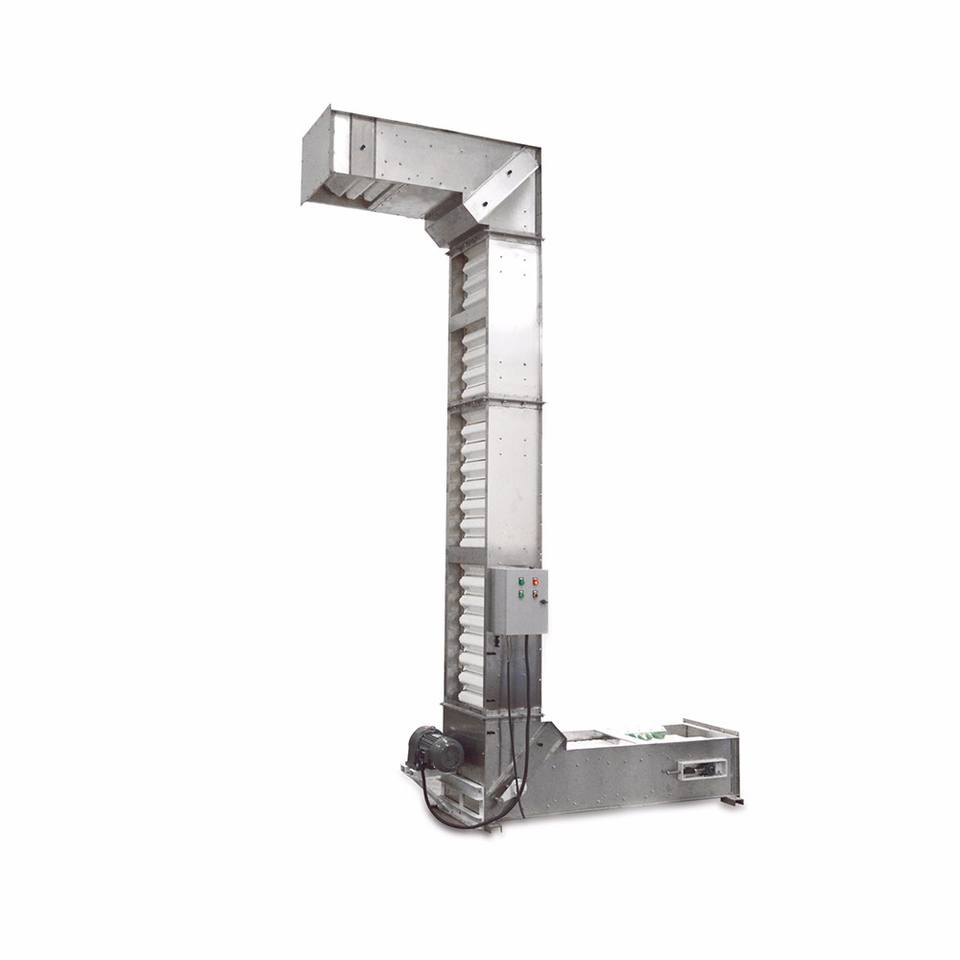 Stainless Steel Bucket Elevator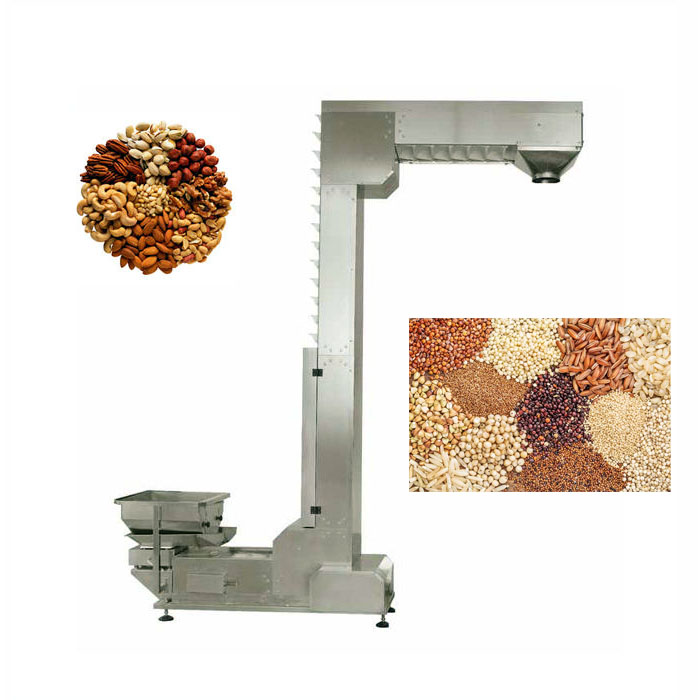
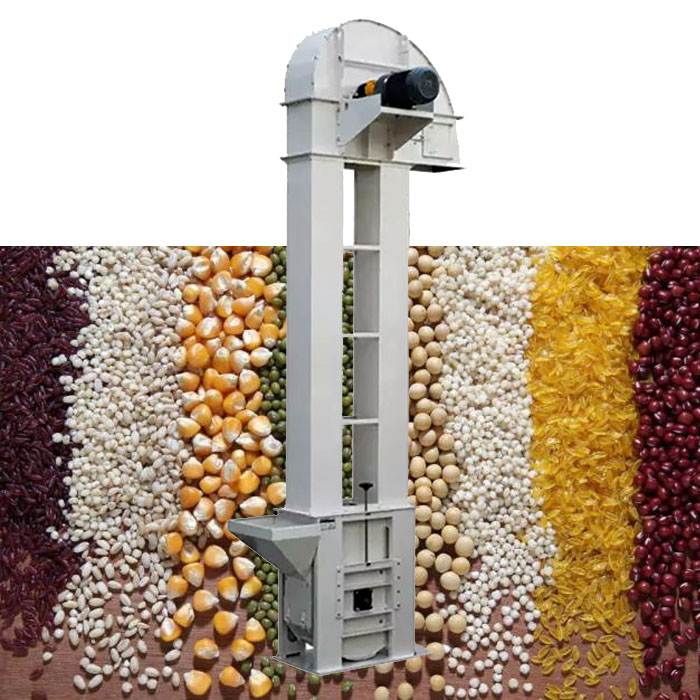 Vertical Bucket Elevator for Grain
Products
Hot Modules
locations


headquarters
Address:China,Yanjin county forest park gate to the west 1000 meters north road.